
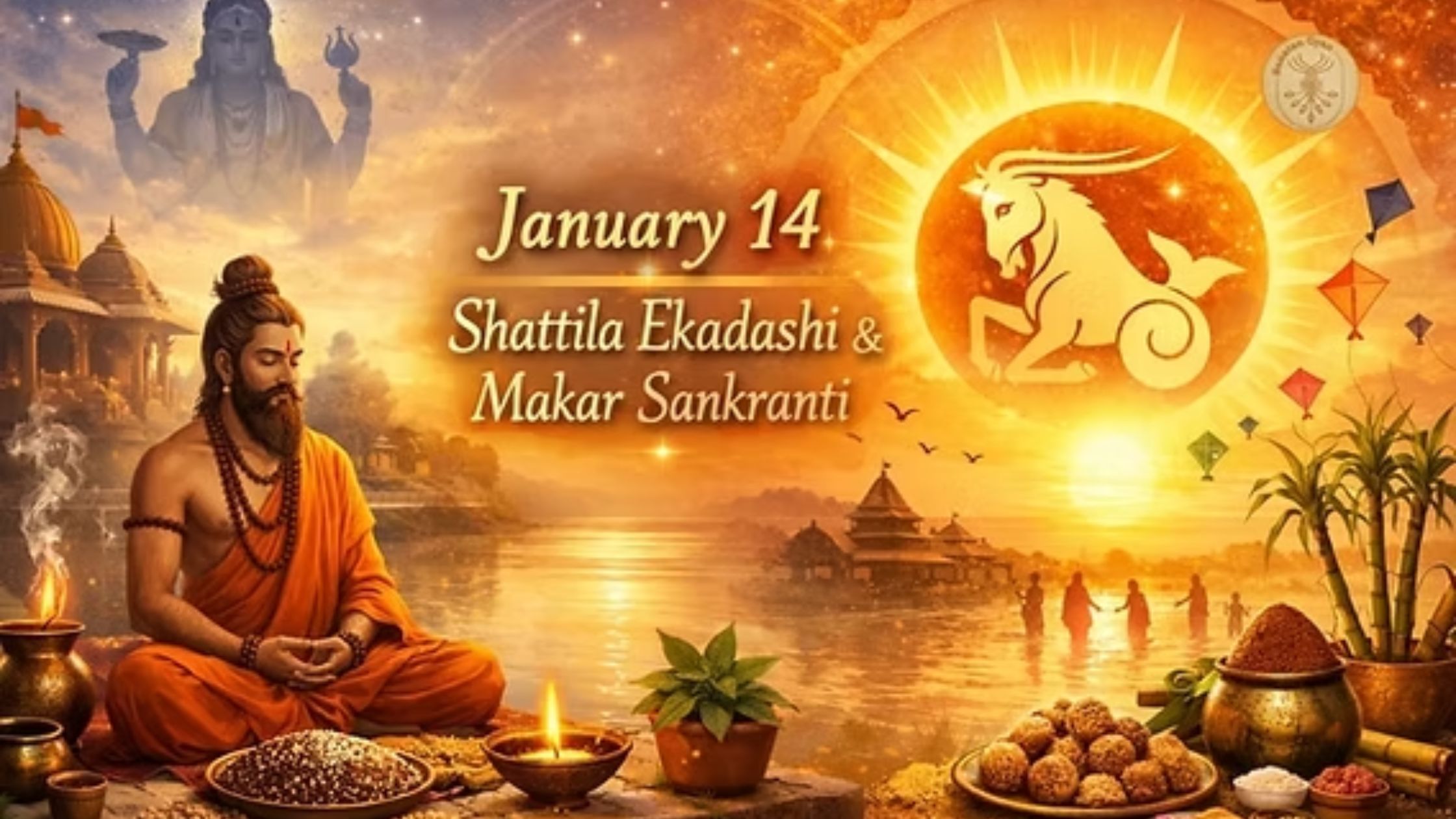
Hindu culture is a harmonious blend of discipline, devotion, festivals, and food rituals. When two spiritually significant observances fall on the same date, it often sparks curiosity—“What should be followed first?” or “How to perform rituals without breaking traditions?”
In 2026, such a moment arises on 14 January, when Ekadashi fasting coincides with Makar Sankranti, the festival of Sun worship and harvest gratitude.
This coincidence offers a thought-provoking spiritual dialogue between restraint (Ekadashi) and celebration (Sankranti).
What is Ekadashi? The Science & Spirituality Behind Avoiding Rice
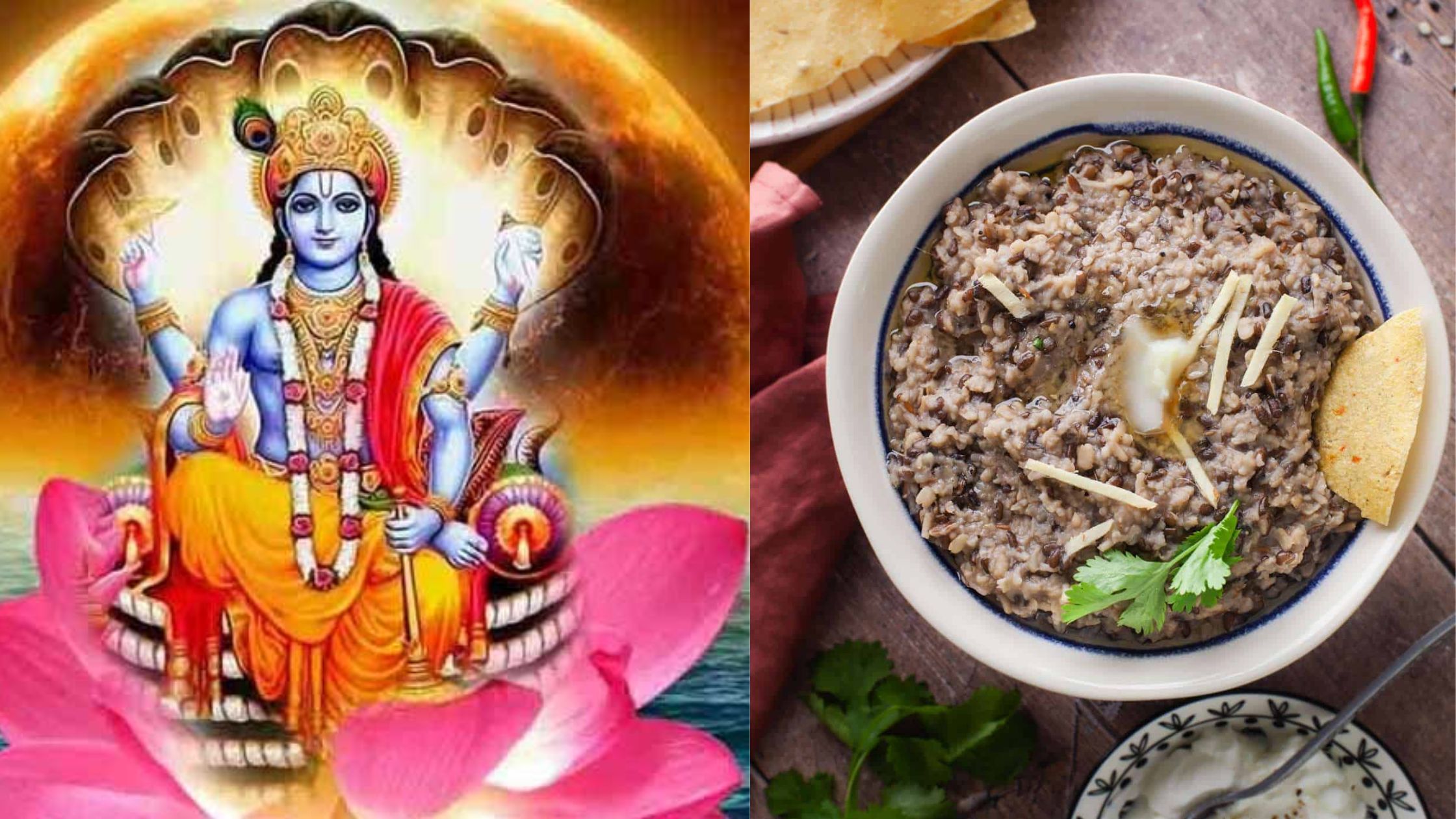
Ekadashi, occurring twice a month on the 11th lunar day, is dedicated to Lord Vishnu. Scriptures advise avoiding rice and certain grains due to multiple beliefs:
Spiritual Reasoning
- Rice is associated with increased tamas and rajas, which may hinder meditation and spiritual clarity.
- Ekadashi is considered a day for mind purification and heightened awareness.
Vedic Dietary Principle
On Ekadashi, the digestive system is given minimal load. Lighter, sattvic foods such as:
- Fruits
- Milk & curd
- Potatoes
- Sabudana
- Kuttu/Singhara flour
are preferred for energy without heaviness.
Mythological Reference
According to Padma Purana, rice grains absorb certain energies during Ekadashi that are not considered beneficial for spiritual seekers. Hence the “no rice” rule has persisted for centuries.
What is Makar Sankranti? Festival of Harvest, Sun & Khichdi
Makar Sankranti marks the transition of Sun into Capricorn (Makara Rashi). Unlike most Indian festivals, its date is tied to the solar calendar, making it largely fixed on 14 January.
Symbolism & Worship
- It represents the end of winter and the beginning of longer days (Uttarayana).
- Associated with Surya Dev, gratitude, charity, and new beginnings.
Importance of Khichdi
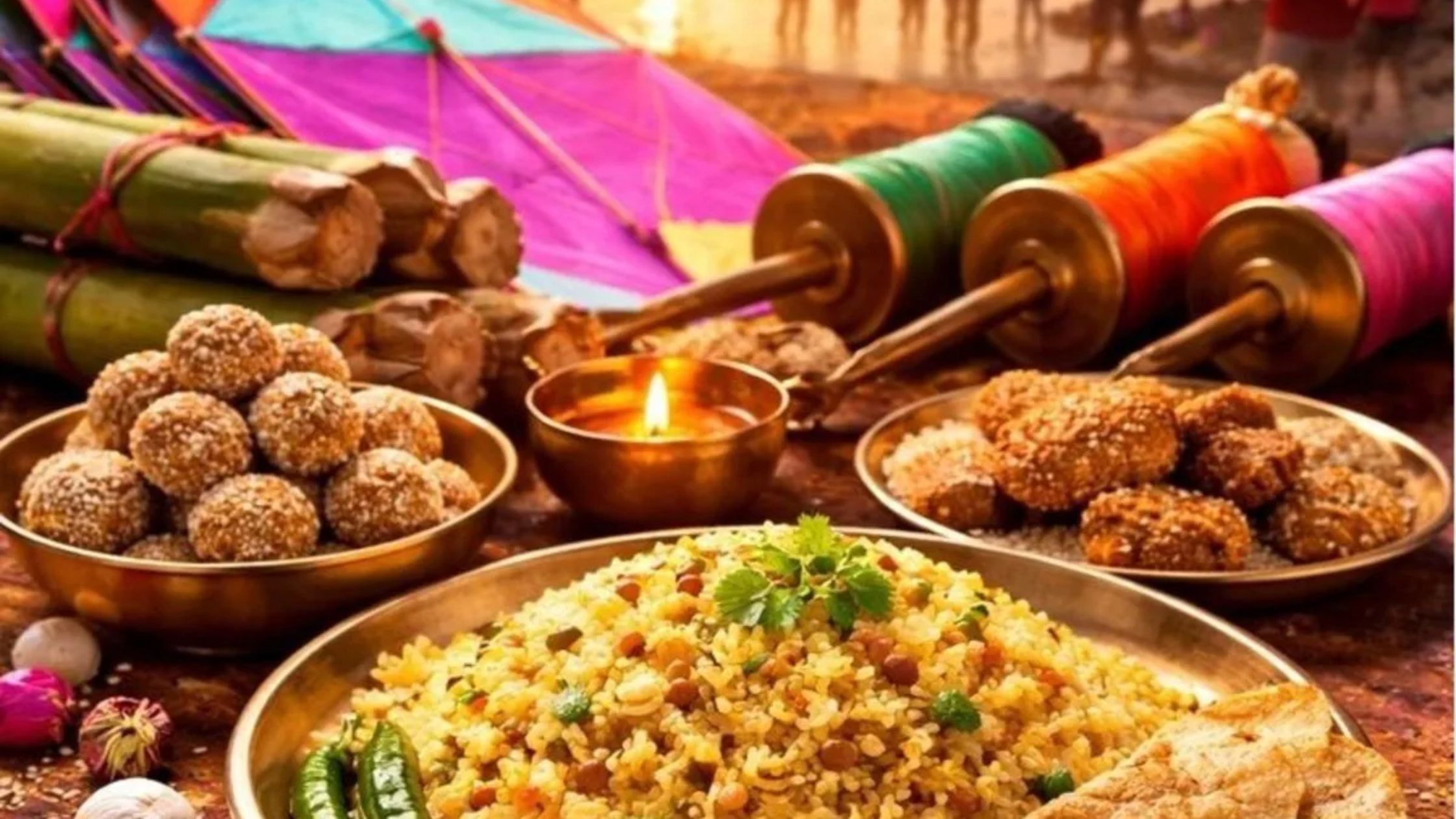
Khichdi, made of rice, dal, ghee, and til (sesame), plays a central role due to its symbolism:
- Rice = prosperity & harvest blessings
- Dal = purity & sattva
- Sesame seeds = warmth & spiritual protection
- Ghee = auspicious richness
In Bihar, UP & Nepal, donating Khichdi, til, gud, and blankets is believed to accumulate punya (merit).
2026 Calendar Overlap: Ekadashi + Makar Sankranti on the Same Day
On 14 Jan 2026, Ekadashi fast overlaps with Khichdi celebrations, raising the core question:
Can one eat rice-based Khichdi during Ekadashi?
Traditionally, the answer is no, as Ekadashi fast discourages rice consumption.
Read more: Maha Shivratri Vrat Recipes
How Devotees Can Balance Both Traditions
Option 1: Symbolic Sankranti, Strict Ekadashi
- Offer khichdi to Surya Dev as bhog
- Donate food items
- Eat khichdi next day on Dwadashi after breaking fast
Option 2: Modified Khichdi for Ekadashi
To honor both rituals without breaking rules:
- Sama rice khichdi
- Sabudana khichdi
- Rajgira khichdi
These are grain-free and Ekadashi-compliant.
Option 3: Regional Flexibility
Some cultures prioritize festivals over fasting, while others prioritize fast over meal traditions. Hindu dharma accommodates both without judgment, as intention (bhava) is considered supreme.
Astrological & Religious Significance
Uttarayana Begins
Starting Sankranti, the Sun begins moving northward, symbolizing:
- enlightenment
- cosmic positivity
- new harvest cycle
In Mahabharata, Bhishma Pitamah delayed death until Uttarayana — a sign of its spiritual auspiciousness.
Ekadashi – Day for Vishnu
A perfect day for meditation, mantra, and self-restraint:
- “Om Namo Bhagavate Vasudevaya”
- Vishnu Sahasranamam
- Bhagavad Gita reading
Thus 2026 creates a spiritual blend of Surya + Vishnu worship in a single day.
Regional Practices & Cultural Variations
North India
- Focus on khichdi, til-gud, dān-punya
- Fasting flexibility varies
South India
- Sankranti celebrated as Pongal
- Rice-based sweet pongal is offered to Sun
Maharashtra & Gujarat
- Til-gud laddoos shared with phrase:
“Til-gud ghya, goad bola” (Eat sweet, speak sweet)
Where Ekadashi is strictly observed, rice variety is avoided.
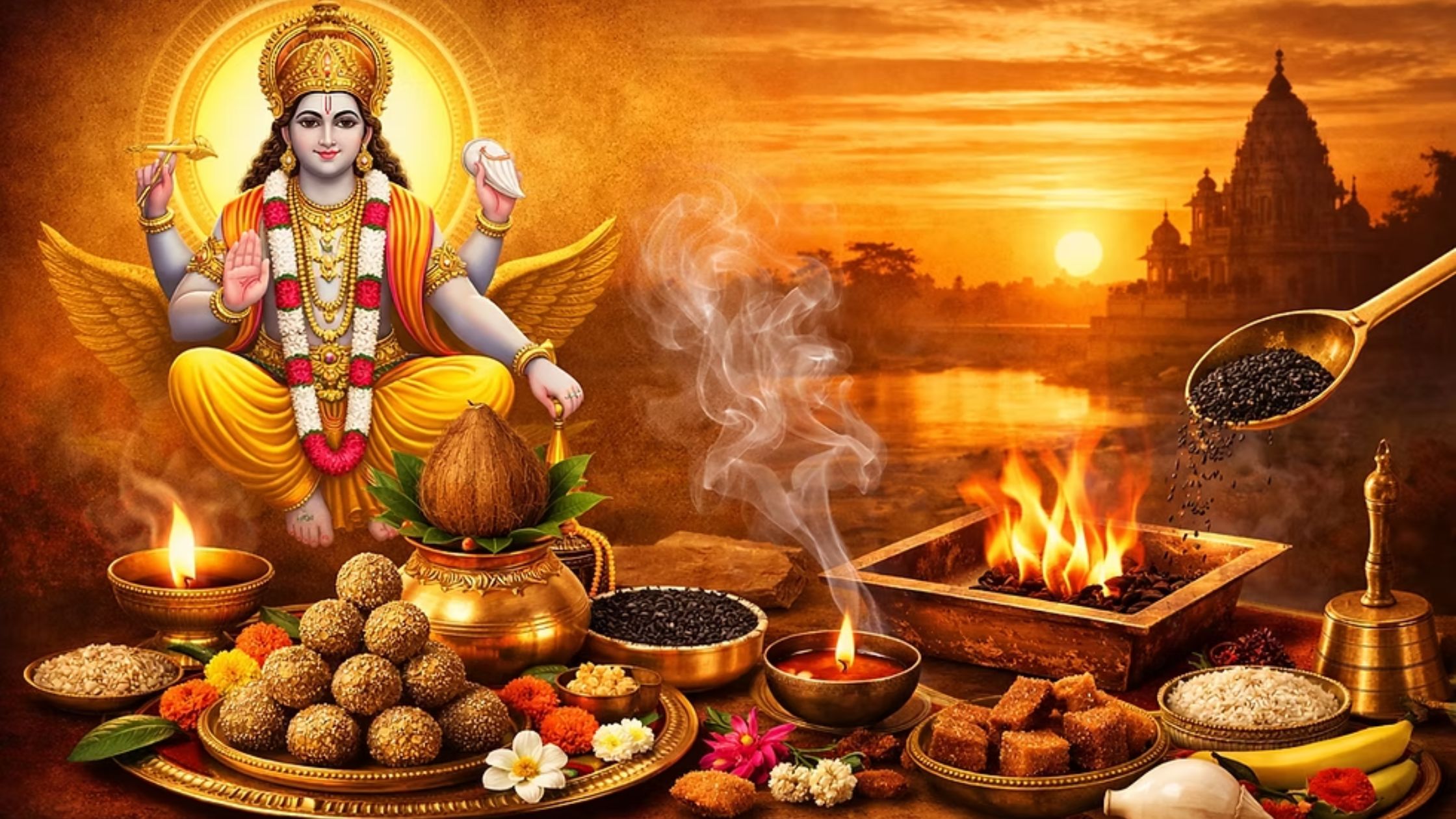
Spiritual Takeaway
This rare overlap symbolizes the balance of inner and outer dharma:
- Ekadashi = inward purification
- Sankranti = outward celebration & gratitude
Choosing discipline or celebration isn’t a conflict—both ultimately lead to upliftment.
Conclusion
Whether you choose:
✔ strict fasting
✔ symbolic offerings
✔ alternative khichdi
✔ or next-day celebration
the deeper essence remains:
gratitude + devotion + purity + charity
Because in Sanatana Dharma, actions matter, but intention matters more.
Read More: Shri Girdharlal Ji Vyahula Utsav 2026: Divine Wedding of Lord Krishna in Barsana