

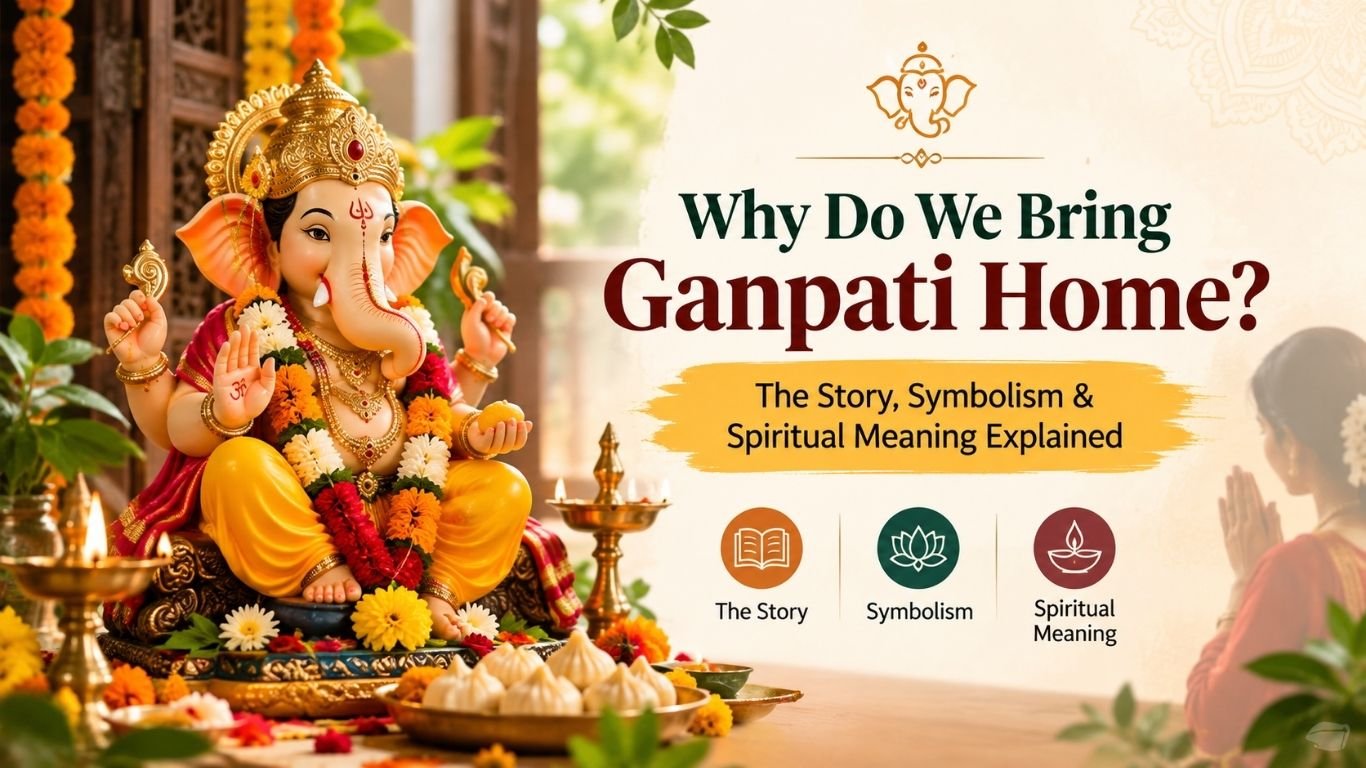
Wondering why millions of families bring Ganpati home during Ganesh Chaturthi and then bid him farewell through Visarjan? The tradition is more than decoration or celebration—it represents welcoming wisdom, prosperity, auspicious beginnings, and the removal of obstacles into everyday life.
Watch here: श्री गणेश स्थापना के शुभ मुहूर्त
Why Do We Bring Ganpati Home?
Bringing Ganpati home during Ganesh Chaturthi is a devotional tradition symbolising the welcome of Lord Ganesha, the deity associated with wisdom, prosperity, good fortune and the removal of obstacles. The home becomes a temporary sacred space where families offer prayers, devotion and gratitude before Visarjan.
Ganesh Chaturthi is traditionally observed as the birth anniversary of Lord Ganesha. In 2026, Ganesh Chaturthi falls on September 14, with the festival culminating in Ganesh Visarjan on September 25.
For devotees, bringing a Ganpati murti home creates an opportunity to pause, pray, and begin something new with a clear mind. Ganesha is traditionally invoked at the beginning of important ventures, making his presence especially meaningful for families starting a new chapter, project or journey.
Watch now : गणपति बप्पा के आगमन की तैयारियाँ
The Story Behind Ganpati’s Arrival
One of the best-known Ganesha stories describes how Parvati created Ganesha to guard her while she bathed, and Shiva later restored him with an elephant’s head after a tragic confrontation. This story explains Ganesha’s transformation and his revered place as a powerful symbol of wisdom and protection.
According to a widely told version, Parvati created Ganesha and instructed him to guard the entrance. When Shiva arrived, Ganesha stopped him from entering because he was following his mother’s command. A confrontation followed, and Shiva severed Ganesha’s head.
Seeing Parvati’s grief, Shiva restored Ganesha by giving him an elephant’s head. He was then honoured as Ganapati, becoming one of the most widely revered Hindu deities.
The story carries a powerful message: transformation can follow conflict, loss and change. This is one reason Ganesha is associated with overcoming obstacles and beginning again with wisdom.
What Does Ganpati Symbolise?
The form of Lord Ganesha carries multiple layers of symbolism: his elephant head is associated with wisdom, his large ears with attentive listening, his broken tusk with sacrifice and knowledge, and his mouse vehicle with mastering restless desires. Together, these symbols offer practical spiritual lessons for everyday life.
Here are some key symbols to notice:
- Elephant Head: Represents wisdom, understanding and thoughtful action.
- Large Ears: Remind us to listen carefully before making decisions.
- Broken Tusk: Often associated with knowledge, sacrifice and perseverance.
- Mouse: Symbolises desires and restlessness that should remain under control.
- Modak: Represents the sweetness or reward associated with spiritual knowledge.
- Large Belly: Traditionally interpreted as the capacity to accept and digest life’s experiences.
Rather than simply admiring these symbols, devotees can use them as reminders for daily living: listen more, think wisely, control distractions, and remain resilient through change.
What Does Bringing Ganpati Home Mean Spiritually?
Spiritually, bringing Ganpati home represents inviting wisdom, positive beginnings and obstacle-removing energy into the household. The daily prayers and offerings create a period of reflection, while the eventual Visarjan reminds devotees that physical forms are temporary and that devotion continues beyond the festival.
A meaningful Ganesh Chaturthi celebration can be approached through a simple framework:
- Welcome: Prepare a clean and peaceful space for the Ganpati murti.
- Pray: Spend time in sincere prayer rather than focusing only on elaborate arrangements.
- Reflect: Use Ganesha’s symbolism to think about wisdom, discipline, and new beginnings.
- Celebrate: Share the festival with family and community.
- Let Go: Treat Visarjan as a reminder of impermanence, gratitude, and renewal.
Why Is Ganpati Visarjan Important?
Ganpati Visarjan symbolises the temporary nature of the physical idol and the continuation of spiritual devotion beyond its physical presence. After days of worship and celebration, devotees immerse the idol as part of the festival’s closing tradition, creating a powerful reminder of change, renewal, and letting go.
This is what makes the tradition especially meaningful: Ganpati arrives, brings people together, inspires reflection, and then leaves. The devotion, lessons and positive intentions created during the celebration remain with the family.
Frequently Asked Questions
1. Why is Ganpati brought home during Ganesh Chaturthi?
Ganpati is brought home to honour Lord Ganesha and welcome his qualities of wisdom, prosperity, good fortune, and obstacle removal into the household.
2. What is the spiritual meaning of Ganpati Visarjan?
Visarjan represents impermanence, renewal, and letting go. It reminds devotees that while the physical form is temporary, faith and spiritual values continue.
3. What does Lord Ganesha symbolise?
Lord Ganesha is widely associated with wisdom, learning, prosperity, good fortune, new beginnings, and the removal of obstacles. His distinctive form also carries deeper symbolic meanings related to listening, knowledge, discipline, and resilience.
Final Thought
Bringing Ganpati home is ultimately about more than welcoming an idol. It is an invitation to welcome wisdom over confusion, patience over haste, and meaningful new beginnings over fear—making Ganesh Chaturthi a celebration that can continue to inspire long after Visarjan.
Learn more here: Anant Chaturdashi: A Day of Devotion, Puja, and Muhurta During Ganesh Chaturthi