

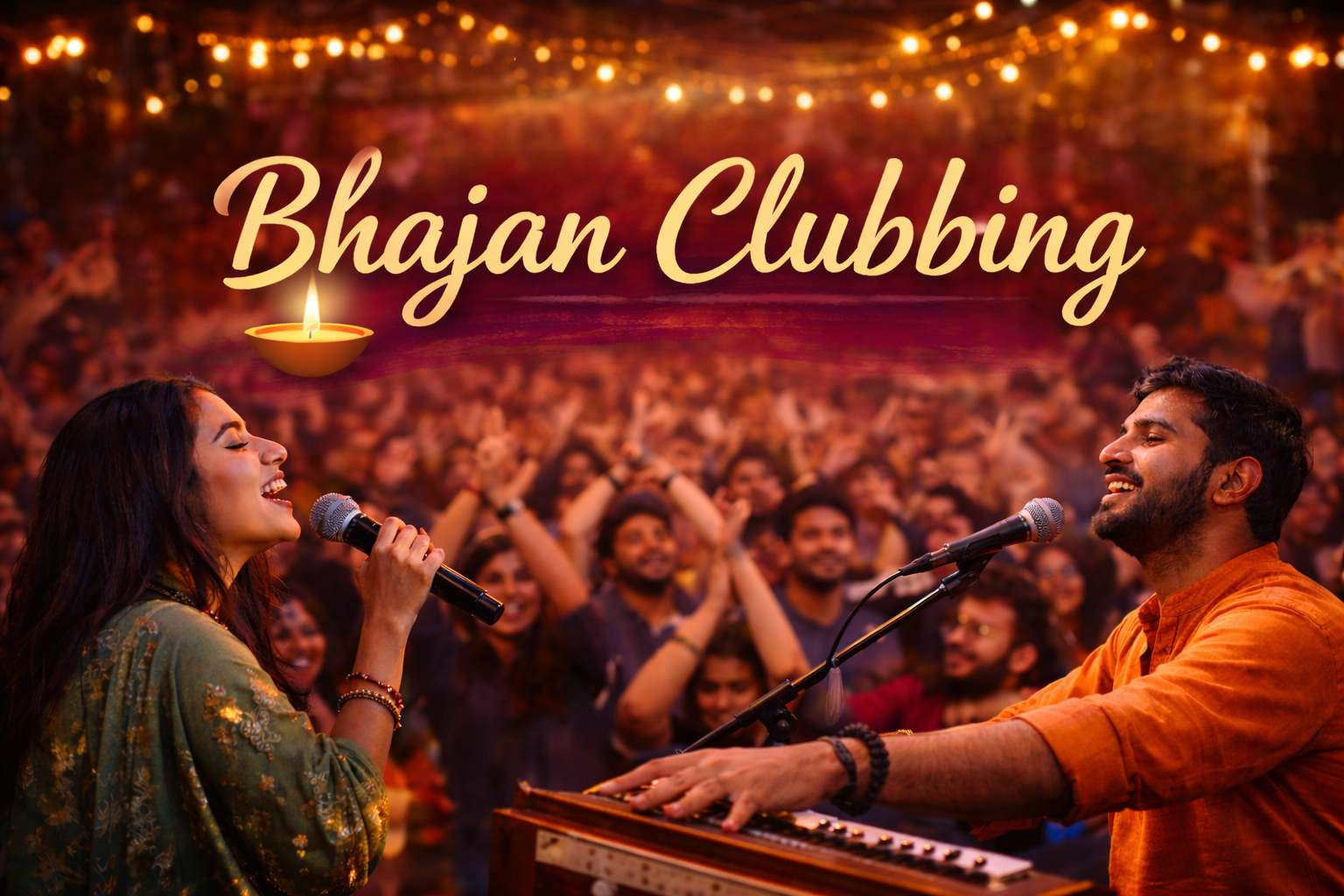
On a Friday night in a metro city, the lights are dim, the crowd is young, and the energy feels electric. But instead of DJs, alcohol, and booming bass, the room echoes with “Hare Krishna Hare Rama.” Hands clap in rhythm. Eyes close. Phone record. Smiles spread.
Welcome to Bhajan Clubbing—India’s newest cultural crossover, where devotion meets modern youth culture.
In 2026, Gen Z isn’t walking away from spirituality. They’re reclaiming it—on their own terms.
Read more: Radha Krishna Vivah 2026
When Spirituality Started Feeling Cool Again
For years, spirituality was often boxed into two extremes for young people:
- Too rigid and traditional
- Or completely disconnected from modern life
Bhajan clubbing changed that narrative.
These gatherings don’t look like temples or nightclubs. They feel like safe, soulful spaces—open halls, cafés, rooftops, or cultural venues—where young Indians come together to sing bhajans, chant mantras, and experience collective calm.
No sermons.
No pressure.
Just music, emotion, and community.
Why Gen Z Is Choosing Bhajans Over Clubs
This shift didn’t happen overnight. It’s rooted in how this generation experiences the world.
1. They’re Exhausted by Hustle Culture
Gen Z grew up amid pandemics, digital overload, career anxiety, and constant comparison. Loud nightlife doesn’t always feel like escape anymore. Bhajan clubbing offers rest without isolation.
2. They Crave Real Connection
In a world dominated by screens, singing together creates something rare—shared presence. You don’t just attend a bhajan session; you feel it with others.
3. They Want Spirituality Without Fear
There’s no judgment, no “right way” to participate. Sit, stand, sing, listen—everyone belongs. That openness makes spirituality feel accessible instead of intimidating.
Social Media Didn’t Create the Trend—It Amplified It
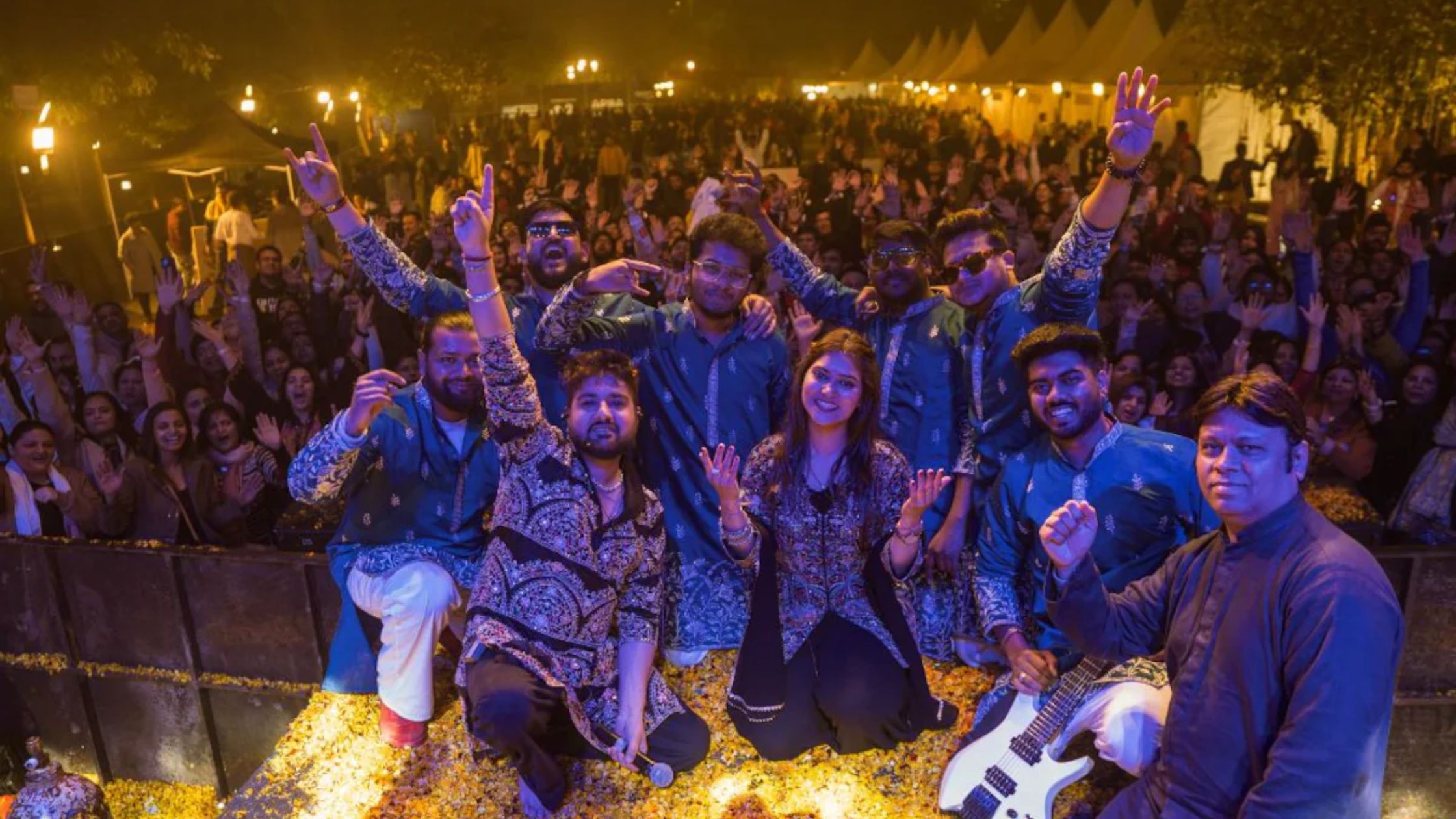
Short videos of bhajan clubbing sessions have gone viral across Instagram and YouTube. Soft lights, powerful voices, hundreds singing together—it’s visually striking and emotionally resonant.
But what keeps people coming back isn’t the aesthetic.
It’s the after-effect: calm minds, lighter hearts, and a sense of belonging.
The Quiet Impact on Children and Younger Teens
Interestingly, bhajan clubbing isn’t influencing only Gen Z.
Children watching parents or older siblings attend these events begin associating spirituality with:
- Joy instead of rules
- Music instead of lectures
- Community instead of obligation
For many kids, bhajans stop feeling like something forced and start feeling natural and expressive. That early emotional connection may shape a more balanced spiritual outlook as they grow.
Learn more: Holi in Vrindavan
What This Means for Future Generations
If this movement continues, it could redefine how spirituality is passed down.
Instead of:
- Strict rituals with little explanation
- Or complete detachment from tradition
Future generations may inherit a version of faith that is:
- Emotionally grounded
- Voluntary
- Community-driven
Bhajan clubbing may help bridge the long-standing gap between tradition and modern life—without discarding either.
Is Bhajan Clubbing Really a Good Thing?
The answer isn’t black or white.
1. Why Many See It as Positive
- It revives interest in devotional music
- Offers a healthy, substance-free social space
- Encourages mindfulness and emotional well-being
- Builds real-world community in a digital age
2. The Concerns
Some worry that:
- Devotion could become performative
- Spiritual depth might be replaced by trends
- Bhajans could lose their sacred seriousness
These concerns matter—but they come down to intention.
Spirituality has never been about the location or format. It has always been about inner connection.
Intention Is the Real Spiritual Test
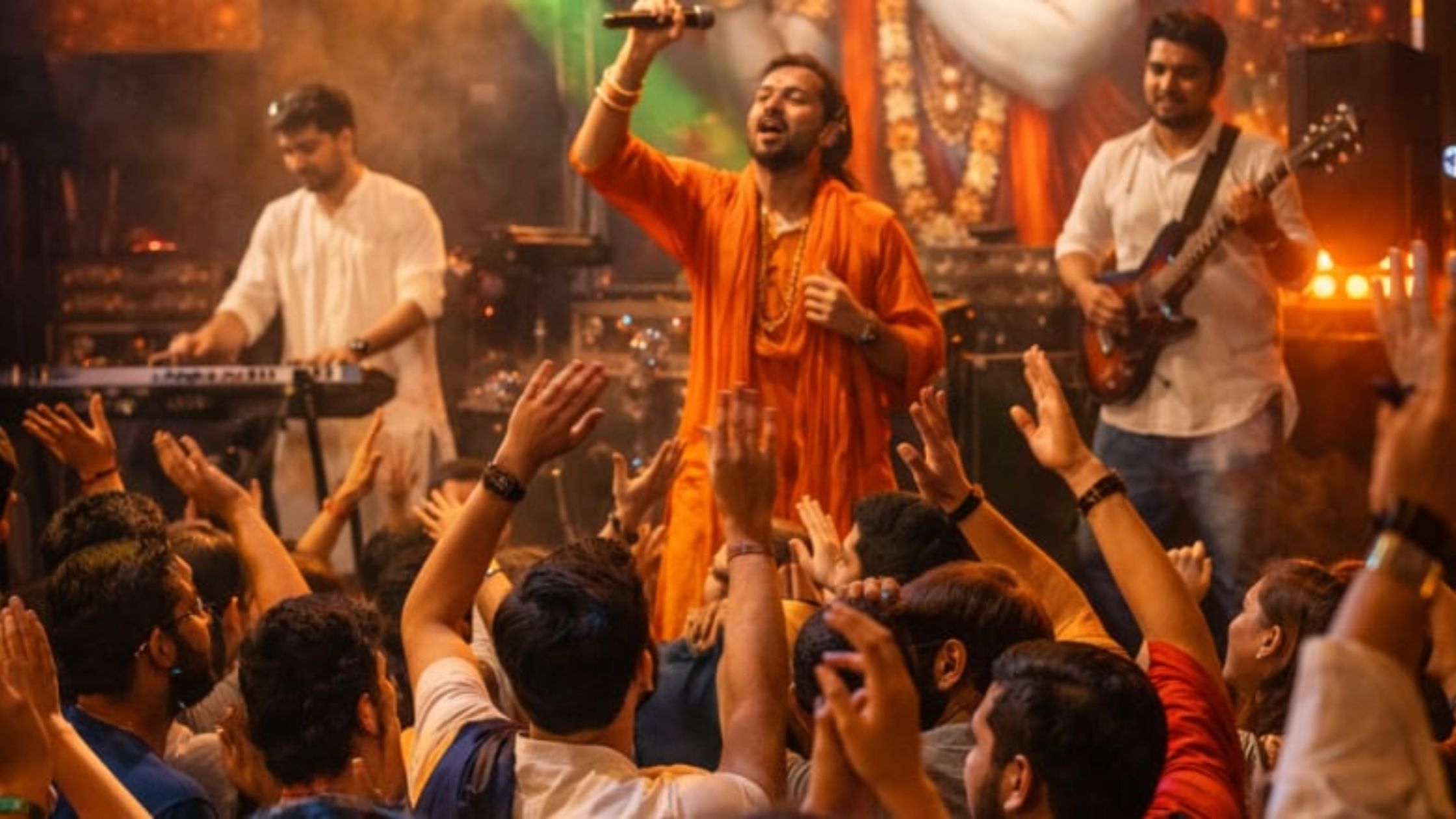
A bhajan sung in a temple, at home, or in a modern gathering carries the same power—if the intent is sincere.
If bhajan clubbing helps people slow down, reflect, feel compassion, and reconnect with something deeper, then it serves a meaningful purpose—even if it looks different from the past.
Where Bhajan Clubbing Is Headed Next
Looking ahead, this movement is likely to evolve:
- More family-friendly and inclusive gatherings
- Integration into wellness retreats and cultural festivals
- Expansion beyond big cities into smaller towns and global Indian communities
Rather than replacing traditional spirituality, bhajan clubbing may simply become another doorway into it.
Final Thought
Bhajan clubbing isn’t about turning faith into entertainment.
It’s about making space for devotion in modern lives.
In 2026, Gen Z isn’t abandoning tradition—they’re carrying it forward, in a language that feels honest to them.
And perhaps that’s how spirituality survives every generation:
by changing its form, while keeping its soul intact.
Read more: Khatu Shyam Falgun Mela 2026