

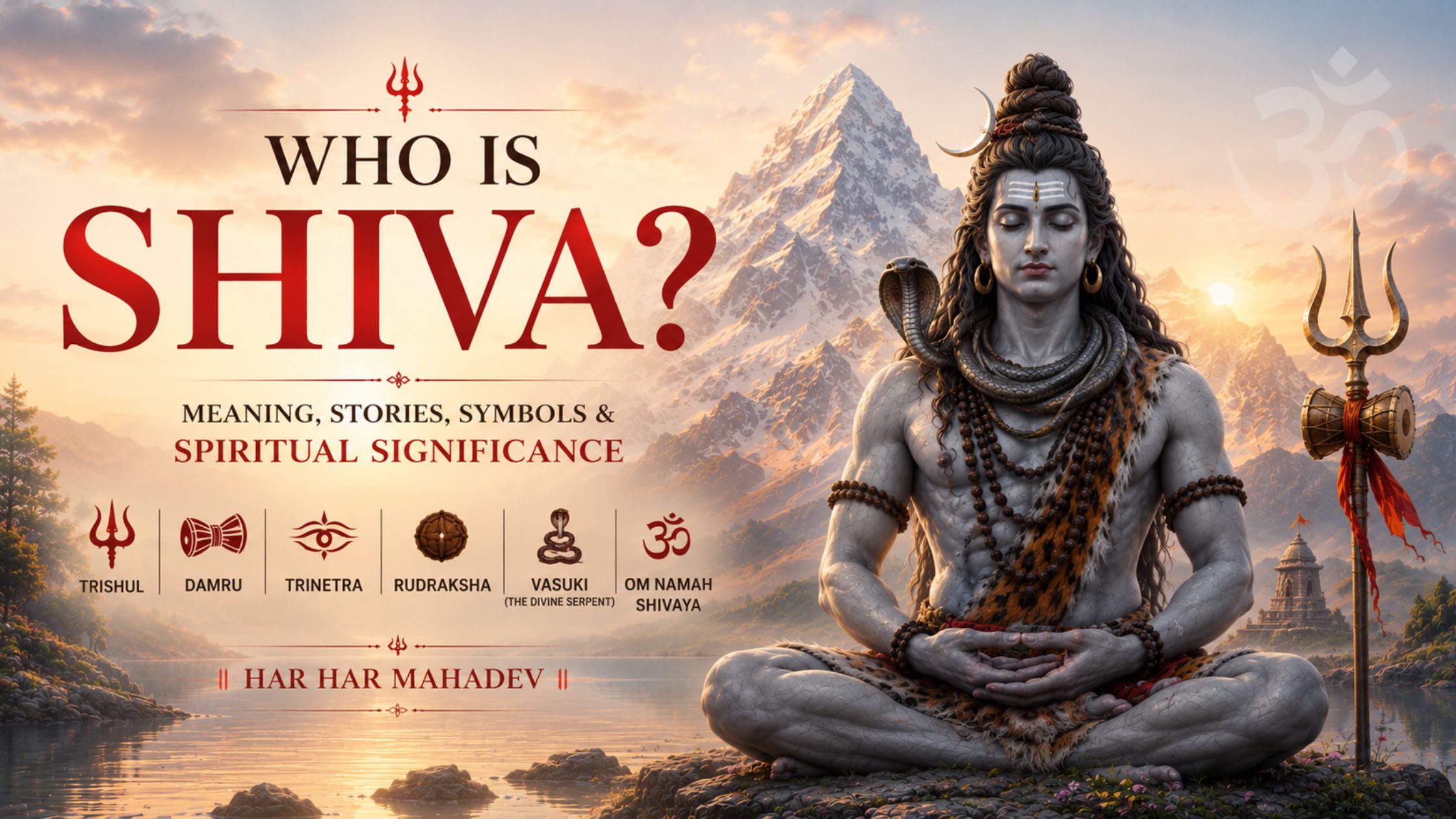
Meaning, Stories, Symbols & Spiritual Significance
Some names in this world are not spoken… they are felt.
“Shiva” is one of them.
The moment someone chants “Om Namah Shivaya,” something changes within. The mind becomes quieter. The heart feels lighter. And for a brief moment, the noise of the world disappears.
Perhaps that is because Shiva is not worshipped merely as a god.
He is experienced as consciousness itself.
For thousands of years, sages, yogis, saints, and devotees have tried to understand who Shiva truly is. Some call Him Mahadev — the greatest among all gods. Some know Him as Bholenath — the innocent lord who accepts every devotee with love. Yogis call Him Adiyogi — the first yogi who gave humanity the wisdom of meditation and inner awakening.
But no single name is enough to describe Shiva.
Because Shiva is not limited to one form.
He is silent and storms together.
He is destruction and compassion together.
He is terrifying to evil, yet infinitely gentle to His devotees.
And perhaps that is what makes Him so deeply mysterious.
The Silent Yogi of Kailash
Far away from the chaos of human life, beyond crowded cities and restless desires, stands Mount Kailash — the sacred home of Mahadev.
Ancient scriptures describe Shiva sitting there in deep meditation.
His eyes remain closed. Snow falls around Him. The universe moves, galaxies rotate, life begins and ends… yet Shiva remains still.
Ash covers His body. A serpent rests peacefully around His neck. The crescent moon shines upon His head. From His tangled locks flows the sacred river Ganga.
Unlike other gods shown with royal crowns and golden palaces, Shiva chooses simplicity.
He sits in silence because He is beyond worldly attachment.
This is why devotees say Shiva is not the god of materialism. He is the god of truth.
And truth does not need decoration.
What Does “Shiva” Mean?
The word “Shiva” means:
“The Auspicious One.”
But spiritually, Shiva represents something much deeper.
He is the infinite consciousness from which all existence emerges and into which everything eventually dissolves.
In Hindu philosophy, Shiva is often called “The Destroyer,” but this destruction is not negative.
Shiva destroys:
- Ego
- Fear
- Ignorance
- Illusion
- Darkness within the human mind
Just as fire burns impurity from gold, Shiva removes falsehood so the soul can awaken.
That is why people often turn toward Mahadev during the most painful phases of life.
Because sometimes destruction is necessary before transformation can begin.
Why Is Shiva Different From Other Gods?
Everything about Shiva feels unusual.
He wears ashes instead of perfume.
He lives in the mountains instead of palaces.
He keeps snakes around His neck instead of precious jewels.
But every symbol connected to Shiva carries profound meaning.
The ashes remind humanity that every physical thing eventually turns to dust.
The snake represents fearlessness and mastery over death.
The moon symbolizes calmness during darkness.
And the silence of Shiva represents inner peace that cannot be disturbed by the outside world.
Shiva teaches that real power does not come from wealth or status.
Real power comes from mastering yourself.
The Story of Ganga and Shiva
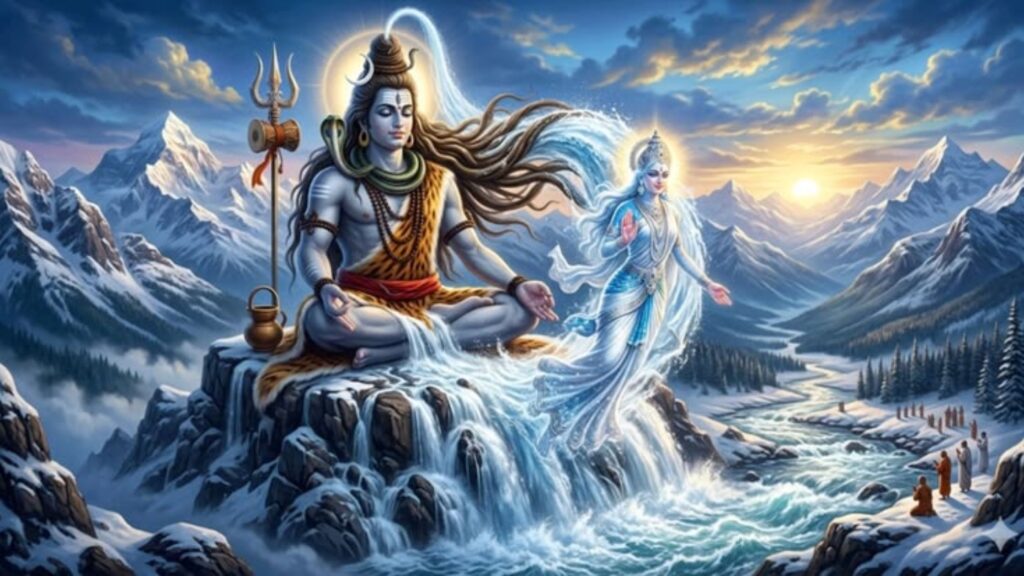
One of the most beautiful stories in Hindu mythology is the descent of Maa Ganga.
Long ago, King Bhagirath performed intense penance to bring the heavenly river Ganga down to Earth so his ancestors could attain salvation.
The gods agreed, but there was one terrifying problem.
The force of Ganga’s descent was so powerful that Earth itself would have shattered.
Only Shiva could stop her.
As Ganga descended from heaven with unstoppable force, Mahadev calmly stood beneath her. Instead of allowing destruction, He captured the entire river within His matted hair.
The river that could destroy worlds became peaceful within Shiva’s jata.
Only then did Shiva gently release Ganga onto Earth.
That is why the sacred river flows from His head.
Spiritually, this story carries a deeper message.
Ganga represents divine energy and wisdom. Shiva represents the consciousness capable of controlling immense power without becoming consumed by it.
Sacred Shiva Verse
“गङ्गातरङ्गरमणीयजटाकलापं
गौरीनिरन्तरविभूषितवामभागम्।
नारायणप्रियमनङ्गमदापहारं
वाराणसीपुरपतिं भज विश्वनाथम्॥”
यह श्लोक श्री विश्वनाथाष्टकम् (काशी विश्वनाथ स्तोत्र) का प्रसिद्ध प्रथम छंद है।
सरल हिंदी अर्थ:
जिनकी जटाओं का समूह गंगा की लहरों से अत्यंत सुंदर लगता है, जिनके वाम (बाएँ) भाग में सदा माता पार्वती (गौरी) सुशोभित रहती हैं, जो नारायण (श्री हरि विष्णु) के प्रिय हैं और कामदेव के मद (अहंकार) का नाश करने वाले हैं, उन वाराणसी के स्वामी भगवान विश्वनाथ का मैं भजन करता हूँ।
This ancient verse beautifully praises Shiva carrying Maa Ganga within His locks.
Shiva’s Trishul — The Symbol of Cosmic Balance
Among all symbols associated with Mahadev, the Trishul is perhaps the most powerful.
To ordinary eyes, it appears to be a weapon.
But spiritually, it represents balance within existence itself.
Its three sharp points symbolize:
- Creation
- Preservation
- Destruction
Some also believe they represent:
- Past
- Present
- Future
And spiritually:
- Mind
- Body
- Soul
When Shiva holds the Trishul, it signifies His mastery over every dimension of existence.
The Trishul reminds humanity that destruction is not always evil. Sometimes old things must end so new beginnings can emerge.
Trishul Mantra
“ॐ त्रिशूलधारिणे नमः”
Meaning: Salutations to the bearer of the divine Trishul.
Pinaka — The Celestial Bow of Shiva
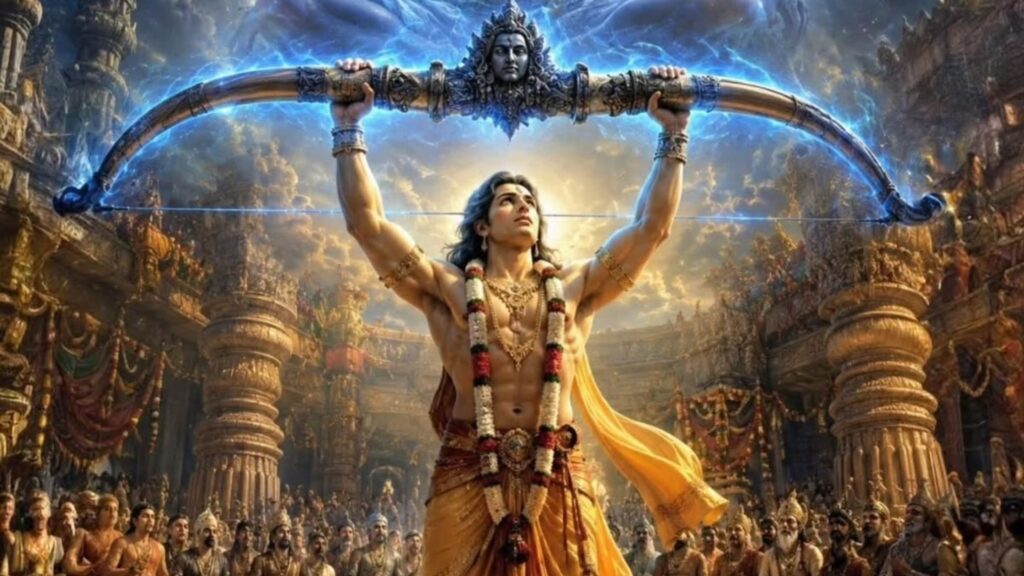
Before the Trishul became Shiva’s most recognized symbol, there was Pinaka — His divine bow.
Ancient scriptures describe Pinaka as a weapon so powerful that no ordinary being could even lift it.
In the Ramayana, King Janaka placed this sacred bow during Sita’s swayamvar. Kings and warriors from across kingdoms tried to lift it, but failed.
Then Lord Rama stepped forward.
The moment He lifted the bow, it broke with a sound so powerful that the earth itself trembled.
That moment was more than a display of strength.
It was destiny revealing itself.
Pinaka represents divine authority, discipline, and spiritual power beyond human understanding.
Rudraksha — The Tears of Mahadev
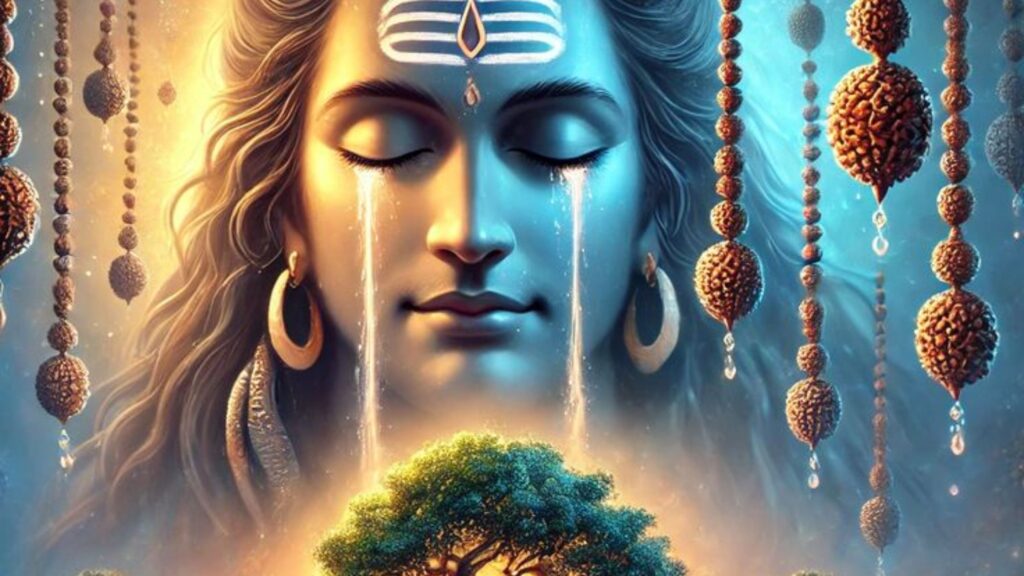
There is a deeply emotional story behind Rudraksha beads.
It is believed that Shiva once entered intense meditation for the welfare of all living beings. When He finally opened His eyes, tears fell upon the Earth.
Those tears became Rudraksha trees.
That is why Rudraksha is considered sacred.
The word itself means:
- Rudra — Shiva
- Aksha — Tears
Even today, saints and devotees wear Rudraksha believing it carries Shiva’s divine energy.
People use Rudraksha during meditation because it is believed to bring:
- Peace
- Focus
- Protection
- Spiritual growth
Rudraksha Mantra
मंत्र: ॐ ह्रीं नमः शिवाय रुद्राक्षाय नमः(Om Hreem Namah Shivaya Rudrakshaya Namah)
मंत्र का अर्थ:
- ॐ: परब्रह्म का प्रतीक।
- ह्रीं: माया या शक्ति का बीज मंत्र, जो चेतना को जागृत करता है।
- नमः शिवाय: भगवान शिव को नमस्कार।
- रुद्राक्षाय नमः: रुद्राक्ष (शिव के प्रिय आंसू) को नमस्कार।
धारण करने की विधि: रुद्राक्ष को अभिमंत्रित करने या धारण करते समय इस मंत्र का 11 या 108 बार जाप करना सबसे उत्तम माना जाता है। इसे हमेशा पवित्र अवस्था में, सोमवार के दिन या किसी शुभ मुहूर्त में धारण करना चाहिए।।
Damru — The Sound From Which Creation Began
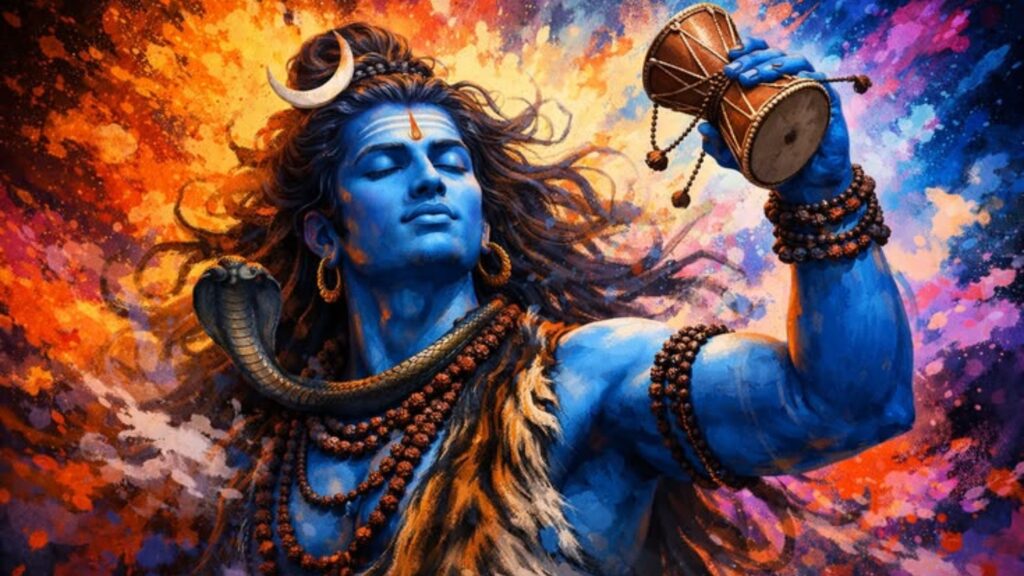
In Shiva’s hand rests a small drum known as the Damru.
According to ancient traditions, when Shiva performed the cosmic Tandava dance, the vibrations of the Damru created the first sounds of existence.
From those vibrations emerged:
- Sound
- Language
- Rhythm
- Creation itself
The Damru represents the eternal cycle of the universe.
Life and death.
Beginning and ending.
Silence and sound.
Everything exists in rhythm.
Shiva Tandava Verse
“जटाटवीगलज्जलप्रवाहपावितस्थले
गलेऽवलम्ब्य लम्बितां भुजङ्गतुङ्गमालिकाम्।”
सरल हिंदी अर्थ:
- जटाटवी गलज्जल प्रवाह पावितस्थले: भगवान शिव की जटाएँ एक सघन वन के समान हैं, जिनसे बहते हुए गंगाजल की धाराओं ने उनके कंठ क्षेत्र को पवित्र कर दिया है।
- गलेऽवलम्ब्य लम्बितां भुजङ्गतुङ्गमालिकाम्: उनके गले में बड़े-बड़े और विशालकाय साँपों की मालाएँ लटक रही हैं।
- डमड्डमड्डमड्डमन्निनादवड्डमर्वयं: उनके डमरू से ‘डमड् डमड् डमड् डमड्’ की ध्वनि निकल रही है।
- चकार चण्डताण्डवं तनोतु नः शिवः शिवम्: उन महादेव ने प्रचंड तांडव नृत्य किया है, वे भगवान शिव हमें कल्याण और शुभता प्रदान करें
This verse from the Shiva Tandava Stotram fills devotees with immense spiritual energy.
Shiva’s Third Eye — The Eye Beyond Illusion
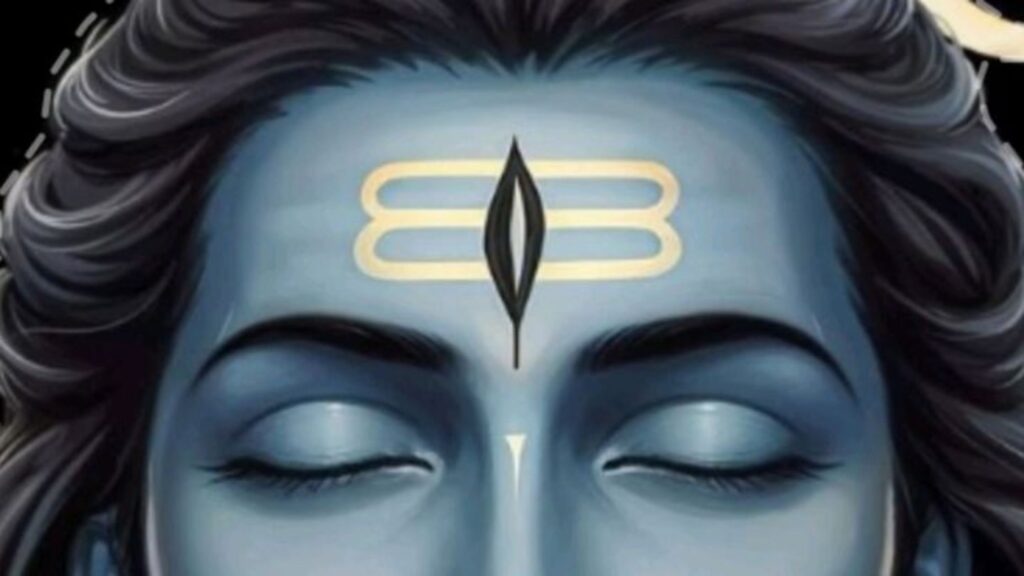
Shiva is often called Trilochana — the three-eyed one.
While ordinary eyes see the physical world, Shiva’s third eye sees truth beyond illusion.
According to mythology, whenever arrogance or evil crossed all limits, Shiva opened His third eye, releasing flames powerful enough to destroy everything false.
But spiritually, the third eye symbolizes:
- Wisdom
- Awareness
- Intuition
- Higher consciousness
It teaches that true vision is not external.
True vision is understanding reality beyond illusion.
Mahamrityunjaya Mantra
“ॐ त्र्यम्बकं यजामहे सुगन्धिं पुष्टिवर्धनम् |
उर्वारुकमिव बन्धनान्मृत्योर्मुक्षीय मामृतात् || ”
This sacred mantra is chanted for healing, protection, and spiritual strength.
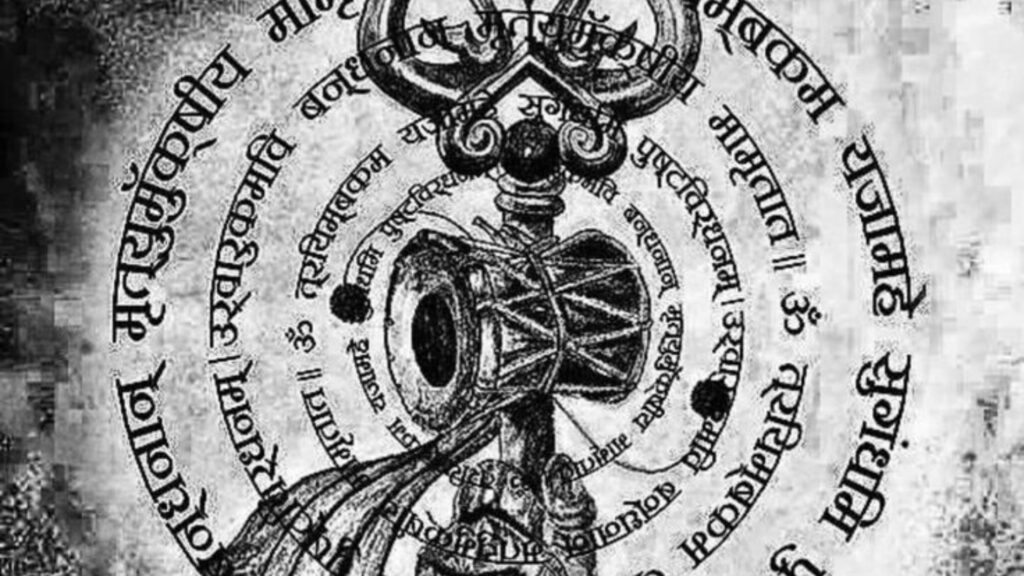
मंत्र का सरल अर्थ
त्र्यम्बकं: तीन नेत्रों वाले (भगवान शिव)। यजामहे: हम आपकी पूजा करते हैं। सुगन्धिं: जो हर सुगंध के स्रोत और जीवन में दिव्यता के प्रसारक हैं। पुष्टिवर्धनम्: जो संसार के पोषणकर्ता हैं और सभी का कल्याण करते हैं। उर्वारुकमिव: जैसे ककड़ी (या खरबूजा) पक जाने पर अपनी बेल के बंधन से मुक्त हो जाती है। बन्धनान्: (संसार के मोह-माया और मृत्यु के) बंधन से।मृत्योर्मुक्षीय: हमें मृत्यु से (भय और अज्ञान से) मुक्त करें। मामृतात्: अमरत्व (मोक्ष/दिव्य ज्ञान) की ओर ले जाएं, न कि अमर होने (मृत्यु न आने) की प्रार्थना है, बल्कि जीवन के अंत में मुक्ति की कामना है।
मंत्र का भावार्थ
“हम तीन नेत्रों वाले भगवान शिव की पूजा करते हैं, जो हर ओर सुगंध फैलाते हैं और हमारा पोषण करते हैं। जिस प्रकार एक ककड़ी पकने के बाद अपनी बेल के बंधन से आसानी से अलग हो जाती है, उसी प्रकार हे प्रभु! आप हमें भी इस जीवन और मृत्यु के बंधन से मुक्त करें, ताकि हमें मोक्ष और अमरत्व की प्राप्ति हो सके।”
लाभ और मान्यता
- आरोग्य और दीर्घायु: हिंदू मान्यताओं के अनुसार, इस मंत्र के नियमित और शुद्ध उच्चारण से शारीरिक कष्ट दूर होते हैं और अकाल मृत्यु का भय मिटता है।
- शांति और मोक्ष: यह मंत्र मन को एकाग्र करता है और आध्यात्मिक उन्नति प्रदान करता है।
आप इस मंत्र का जाप अपनी दैनिक पूजा में रुद्राक्ष की माला के साथ 108 बार कर सकते हैं।
Why Does Shiva Wear a Tiger Skin?
Shiva is often shown sitting upon a tiger skin, known as Baghambar.
The tiger symbolizes uncontrolled desire, pride, and animal instinct.
By sitting upon it, Shiva demonstrates mastery over ego and temptation.
The message is simple:
A person becomes truly powerful only after conquering themselves.
Why Does Shiva Wear Snakes (Vasuki)?
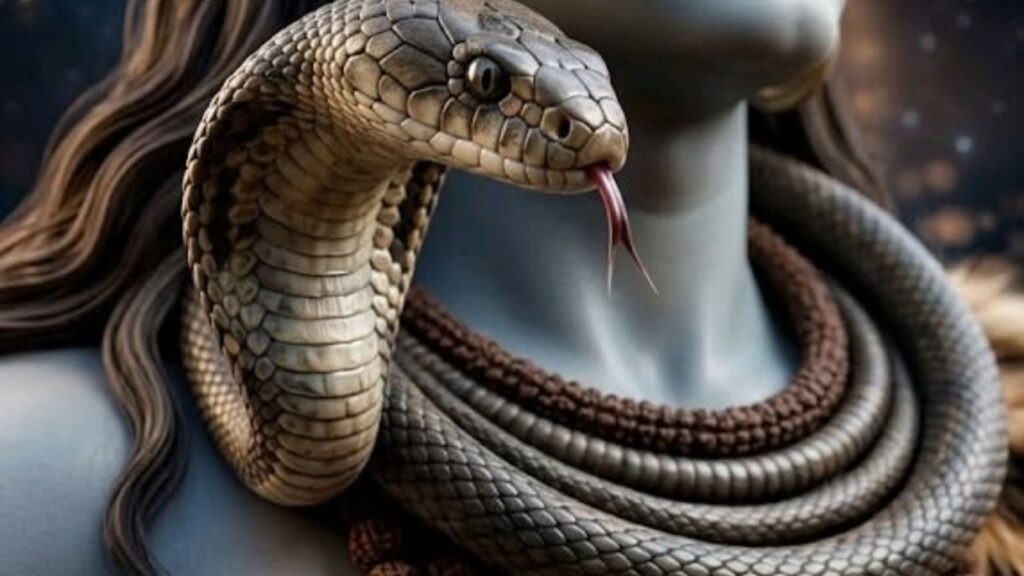
Most people fear snakes because they symbolize danger and death.
But Shiva wears a serpent around His neck fearlessly.
The snake represents:
- Fear
- Death
- Hidden power
- Transformation
By wearing it as an ornament, Shiva shows complete mastery over fear itself.
Spiritually, the serpent is also connected to Kundalini energy — the divine energy believed to exist within every human being.
Shiva Prayer
“नागेन्द्रहाराय त्रिलोचनाय भस्माङ्गरागाय महेश्वराय।
नित्याय शुद्धाय दिगम्बराय तस्मै नकाराय नमः शिवाय॥”
श्लोक का अर्थ:
नागेन्द्रहाराय: जो नागों (साँपों) को अपने हार के रूप में धारण करते हैं।
त्रिलोचनाय: जिनकी तीन आँखें हैं (त्रिलोचन)।
भस्माङ्गरागाय: जिनके पूरे शरीर पर भस्म (राख) का लेप लगा हुआ है।
महेश्वराय: जो सभी देवों के देव और महान ईश्वर हैं।
नित्याय: जो शाश्वत और नित्य हैं।
शुद्धाय: जो एकदम पवित्र और निर्मल हैं।
दिगम्बराय: जो दिशाओं को ही अपने वस्त्र के रूप में धारण करते हैं (दिगम्बर)।
तस्मै नकाराय नमः शिवाय: उस ‘न’ अक्षर स्वरूप शिव को मेरा बार-बार नमस्कार है, जो ‘नमः शिवाय’ का पहला अक्षर है।
Om Namah Shivaya — The Most Powerful Shiva Mantra
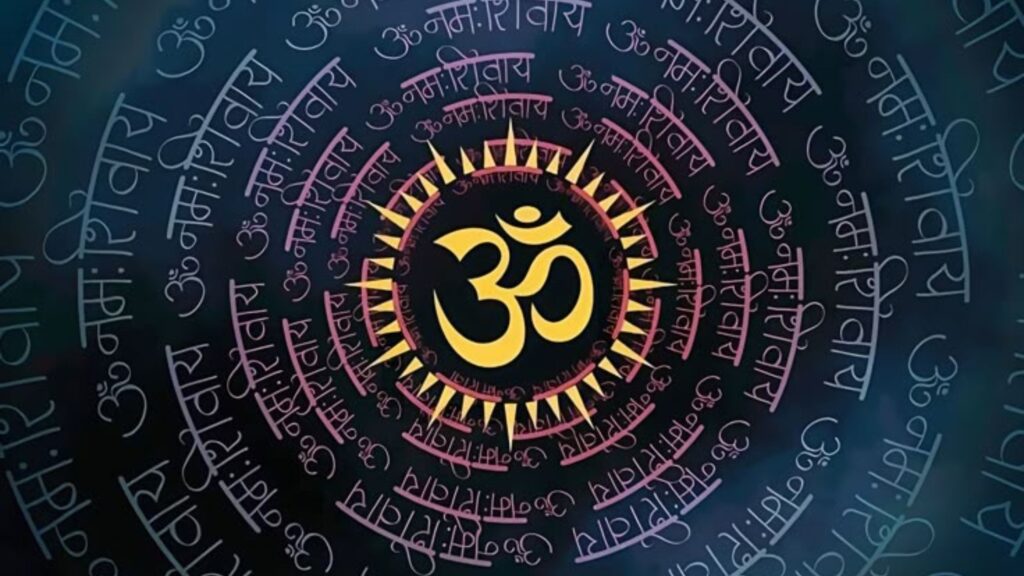
Among all sacred mantras, the most powerful mantra dedicated to Shiva is:
ॐ नमः शिवाय
Om Namah Shivaya
This mantra is called: Panchakshari Mantra
(the five-syllable mantra)
- न (Na): पृथ्वी तत्व (स्थिरता)
- म (Ma): जल तत्व (शुद्धि)
- शि (Shi): अग्नि तत्व (ऊर्जा और प्रकाश)
- वा (Va): वायु तत्व (प्राण शक्ति)
- य (Ya): आकाश तत्व (विस्तार और चेतना)
The Panchakshari Mantra (Lord Shiva’s five-syllable mantra) is “Om Namah Shivaya.” It is considered one of the most powerful and universal mantras in Hinduism. Regular chanting brings peace, clarity, and spiritual energy to the mind.
Meaning of Om Namah Shivaya
- Om = Universal cosmic sound
- Namah = I bow or surrender
- Shivaya = To Shiva
Thus, the mantra means: “I bow to the divine consciousness within.”
This mantra is not merely worship of an external deity.
It is a reminder that the same consciousness present in Shiva exists within every soul.
Shiva as Adiyogi — The First Yogi
Long before yoga became known around the world, Shiva was Adiyogi — the first yogi.
Ancient traditions say Shiva shared the wisdom of yoga and meditation with the Saptarishis, who spread this knowledge across humanity.
As Adiyogi, Shiva represents:
- Meditation
- Self-realization
- Inner silence
- Liberation
He teaches that the greatest journey is not toward the outside world, but toward the self.
The Greatest Devotees of Shiva
Throughout mythology, many powerful devotees surrendered themselves completely to Mahadev.
Ravana
Although remembered as the king of Lanka, Ravana was also one of Shiva’s greatest devotees. His devotion inspired the powerful Shiva Tandava Stotram.
Nandi
Nandi, the sacred bull, symbolizes loyalty, patience, and unconditional devotion toward Shiva.
Markandeya
Young sage Markandeya escaped death itself through his unwavering devotion to Mahadev and the Mahamrityunjaya Mantra.
These stories remind devotees that Shiva values true devotion more than status, wealth, or power.
The Spiritual Significance of Shiva Today
Even in today’s fast and chaotic world, Shiva continues to inspire millions.
Because Shiva teaches truths humanity desperately needs:
- Peace over noise
- Simplicity over greed
- Meditation over distraction
- Truth over illusion
- Inner strength over external validation
Perhaps this is why people who feel broken, lost, or exhausted often feel deeply connected to Mahadev.
Because Shiva is not only the lord of destruction.
He is the lord of transformation.
Final Thoughts
Shiva is not merely a figure from ancient mythology.
He is the silence that calms the restless mind, the strength that helps a soul rise after destruction, and the truth that exists beyond illusion. From the Ganga flowing through His jata to the Trishul held in His hand, every symbol of Mahadev carries a lesson about life, transformation, and spiritual awakening.
Perhaps that is why even after thousands of years, people still close their eyes and whisper:
“Har Har Mahadev.”
Because Shiva is not limited to temples or scriptures alone.
He exists in every moment of surrender, every search for truth, every battle against darkness, and every soul trying to find peace within itself.
And maybe that is the true meaning of JapOm — not just chanting the name of Shiva, but feeling His presence in every breath, every prayer, and every beat of existence.
Final Shiva Chant
“ॐ नमः शिवाय”
My Mahadev guide every heart toward peace, wisdom, fearlessness, and inner awakening.