

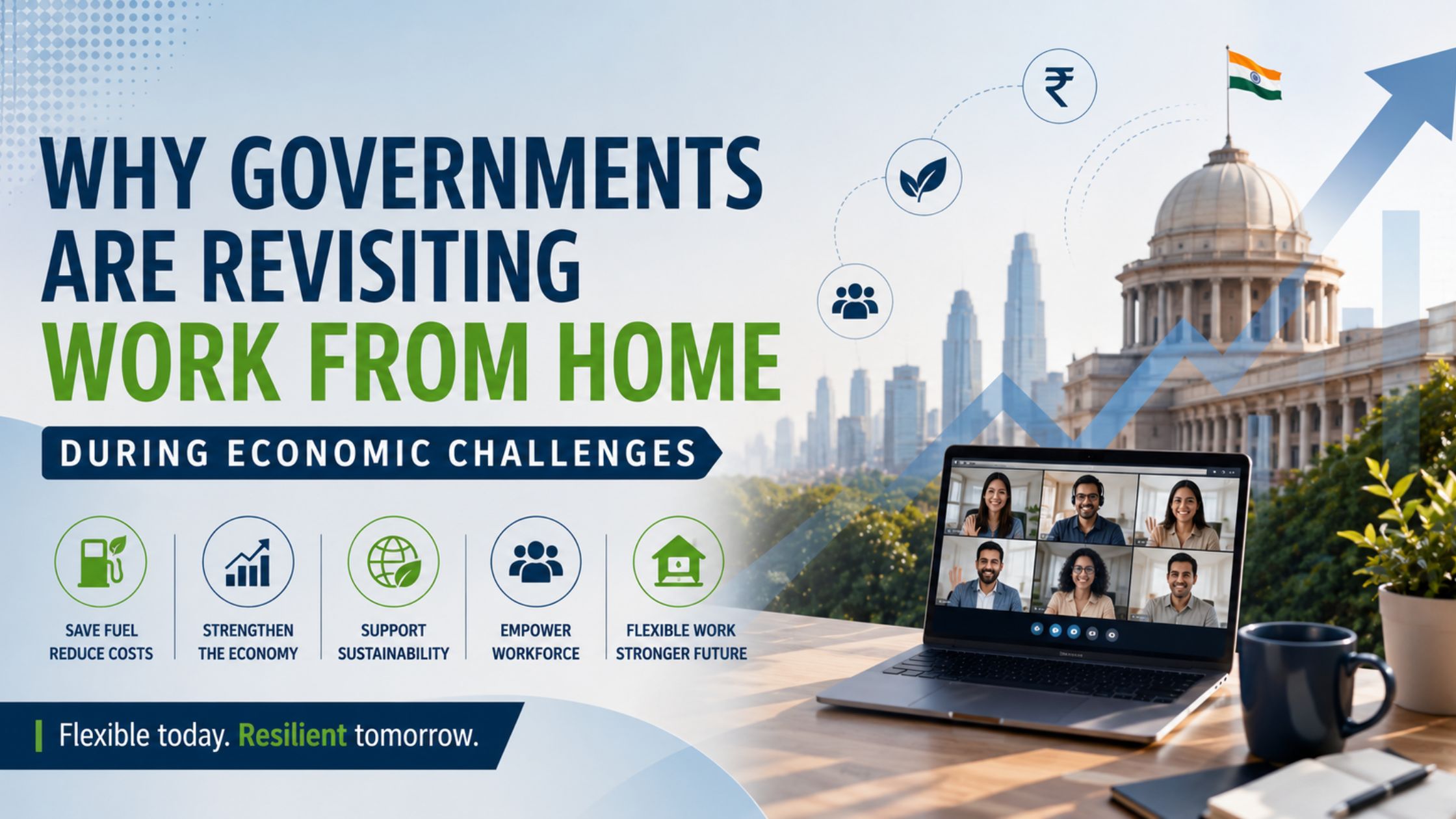
Just a few years ago, Work From Home (WFH) was considered an emergency response to a global pandemic. Today, it is once again becoming part of national discussions — not because of health concerns, but because of economic pressure, rising fuel costs, geopolitical instability, and the growing need for sustainable living.
Recent statements from Prime Minister Narendra Modi encouraging reduced fuel consumption and renewed use of remote work have reignited debate around hybrid work models in India and beyond. Governments, businesses, and employees are once again asking an important question: can working from home help economies remain stable during uncertain times?
The answer is more complex than a simple yes or no. However, one thing is becoming increasingly clear — remote work is no longer viewed as a temporary trend. Instead, many governments now see it as a strategic economic tool.
Learn more: Online Work from Home Ideas
The Return of Remote Work Discussions
During the COVID-19 pandemic, millions of employees around the world shifted to remote work almost overnight. Businesses adapted quickly, digital infrastructure improved, and virtual collaboration became normal.
After restrictions ended, many companies pushed employees back into offices, believing in-person work improved collaboration, productivity, and company culture. However, recent global economic uncertainty has reopened the conversation.
Rising oil prices, supply chain disruptions, and international conflicts have increased pressure on governments to reduce fuel consumption and control operational costs. In India, discussions intensified after the Prime Minister encouraged citizens and businesses to reconsider work-from-home practices to help conserve fuel and reduce unnecessary travel.
Industry groups and employee organizations have since supported the idea, particularly within the IT and digital services sectors where remote work is operationally possible.
Fuel Conservation Has Become a National Priority
One of the biggest reasons governments are revisiting WFH policies is fuel conservation.
Countries heavily dependent on imported oil are vulnerable during geopolitical crises and supply disruptions. As global oil prices rise, transportation costs increase, inflation grows, and economic pressure spreads across industries.
Daily commuting contributes significantly to fuel consumption in major cities. Millions of employees traveling to offices every day increase demand for petrol, diesel, public transportation, and ride-sharing services.
By encouraging remote work even a few days a week, governments can potentially reduce:
- Fuel demand
- Traffic congestion
- Public transportation strain
- Carbon emissions
- Household commuting costs
Experts believe hybrid work could become part of broader energy conservation strategies during economic uncertainty.
The International Energy Agency has also suggested work-from-home measures as part of demand-reduction strategies during fuel crises.
Hybrid Work Is Now Viewed as Economic Infrastructure
Before 2020, remote work was often considered an employee benefit. Today, governments and businesses increasingly view digital work systems as essential economic infrastructure.
Cloud computing, virtual meetings, collaboration software, and secure remote access systems now allow many industries to continue operating even during disruptions.
This flexibility provides governments with an emergency response mechanism during:
- Fuel shortages
- Extreme weather events
- Public transportation disruptions
- Economic slowdowns
- Environmental emergencies
- Geopolitical instability
The ability for sectors like IT, finance, customer service, consulting, and digital marketing to operate remotely gives economies greater resilience during uncertain periods.
Instead of shutting down productivity, governments can encourage remote work to reduce operational pressure while keeping businesses active.
Businesses Are Balancing Flexibility and Productivity
Not every company fully supports permanent remote work. Many organizations still believe office environments improve teamwork, mentorship, creativity, and accountability.
Because of this, hybrid work models are becoming the preferred compromise.
Rather than fully remote operations, businesses are experimenting with flexible schedules where employees work from home several days a week while still attending offices when necessary.
According to industry responses following the Prime Minister’s recent remarks, many technology firms already maintain hybrid systems and are adjusting attendance policies based on operational needs.
Hybrid work offers several business advantages during economic challenges:
- Reduced office operating costs
- Lower electricity and maintenance expenses
- Greater workforce flexibility
- Improved employee retention
- Reduced travel reimbursements
- Business continuity during disruptions
At the same time, companies remain cautious about fully remote structures because some employees benefit from in-person learning, collaboration, and mentorship opportunities.
Employees Continue to Support Flexible Work
For many employees, remote work is no longer simply about convenience. It has become closely linked to quality of life and financial stability.
Working from home can reduce:
- Daily commuting expenses
- Fuel costs
- Parking fees
- Time spent in traffic
- Stress associated with long travel
In large metropolitan areas, commuting often consumes several hours per day. Hybrid work gives employees more personal time while lowering transportation expenses during periods of inflation.
Online discussions show many workers remain supportive of flexible work arrangements, especially when economic pressures increase.
However, there are also concerns about the wider economic impact of reduced office attendance. Restaurants, transport providers, retail shops, and small businesses around commercial districts often depend heavily on office workers.
This is one reason governments and companies continue searching for balanced hybrid models instead of permanent remote systems.

Environmental Benefits Are Also Driving the Debate
Economic concerns are not the only factor influencing remote work discussions.
Governments worldwide are under pressure to reduce emissions and improve sustainability efforts. Fewer commuters on the roads can help reduce urban pollution and carbon output.
Remote work also aligns with broader environmental goals such as:
- Lower vehicle emissions
- Reduced energy consumption in commercial buildings
- Less traffic congestion
- Better urban air quality
While experts note that home energy usage also increases during remote work, many believe hybrid systems still offer long-term environmental advantages when properly managed.
As climate policies become more important globally, hybrid work may increasingly be included within sustainability planning.
The Future of Work May Depend on Flexibility
The renewed debate around work-from-home policies highlights how dramatically workplace expectations have changed.
Remote work is no longer seen purely as a pandemic solution. It is becoming part of larger discussions involving energy security, economic resilience, sustainability, and workforce wellbeing.
Governments are unlikely to mandate permanent remote work across all sectors. Many industries require physical presence, and office-based collaboration still plays an important role in business growth.
However, the idea of flexible work as a strategic response during economic challenges is gaining serious attention.
The future may not belong entirely to offices or remote work alone. Instead, hybrid systems could become the long-term middle ground — offering businesses stability, employees flexibility, and governments an additional tool for managing economic uncertainty.
As global markets continue to face pressure from geopolitical tensions, fuel volatility, and changing workforce expectations, Work From Home 2.0 may become less about convenience and more about national resilience.
Conclusion
The renewed discussion around Work From Home shows that flexible work is no longer just a temporary trend. Governments are revisiting remote and hybrid work models as practical solutions for reducing fuel consumption, lowering costs, and supporting economic stability during uncertain times.
At the same time, many companies are likely to prefer hybrid work rather than fully remote setups. Businesses still value in-office collaboration, but they also recognize the benefits of flexibility, employee satisfaction, and reduced operational expenses. As economic and workplace priorities continue to evolve, hybrid work may become the long-term balance between productivity and flexibility.
Read more: Workplace Stress in India