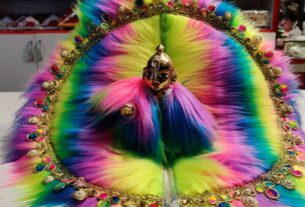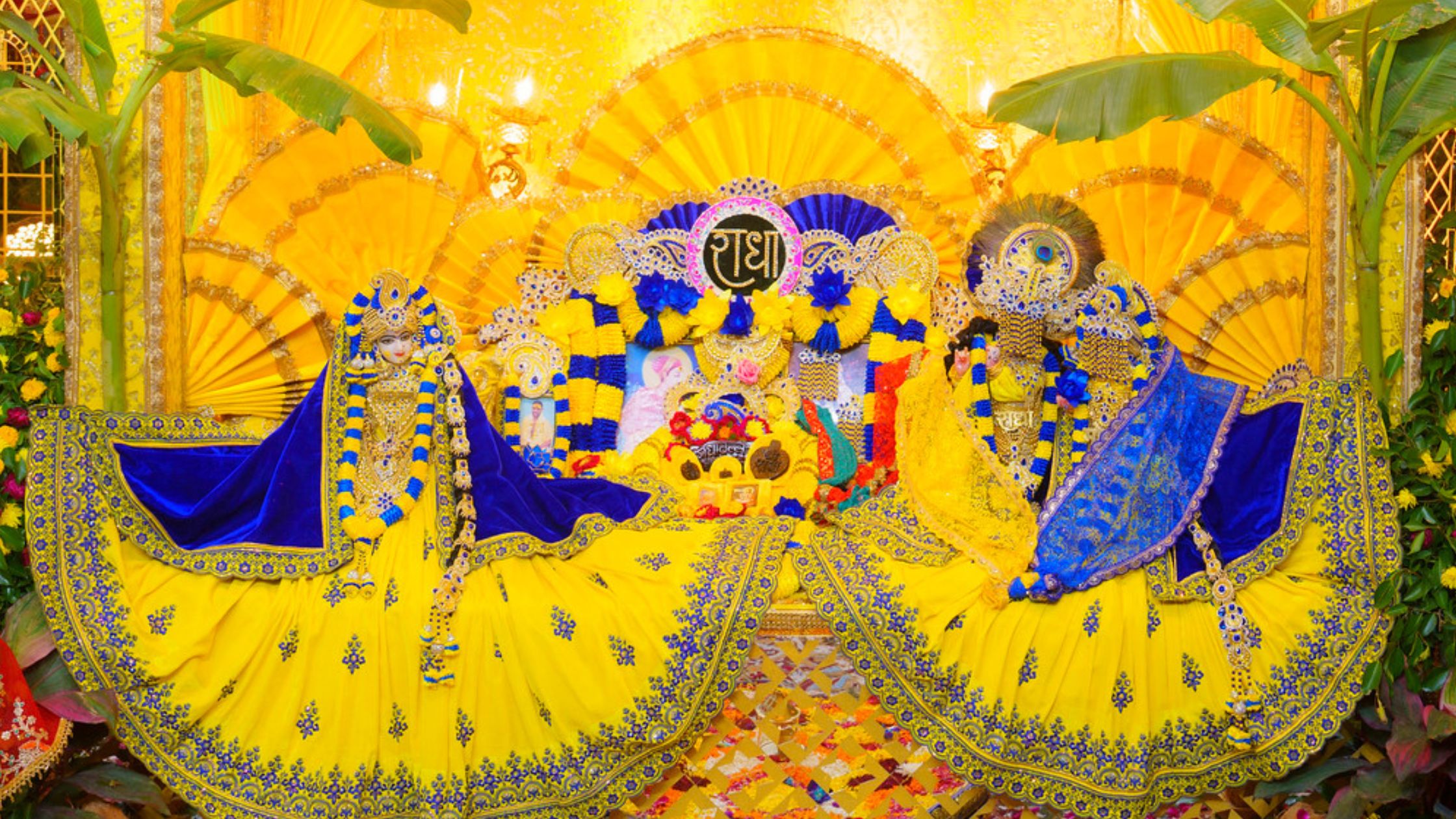


The concept of Radha Krishna Vivah—the divine wedding of Radha and Lord Krishna—is one of the most spiritually profound and symbolic celebrations in Hindu tradition. While popular folklore often highlights their eternal longing and divine separation, sacred texts reveal a deeper truth: Radha and Krishna were united in a celestial wedding performed by Lord Brahma himself.
In 2026, this auspicious divine wedding will be celebrated on
Thursday, 19 February 2026,
with immense devotion across Braj Bhoomi, especially in Bhandirvan, Vrindavan, Barsana, and Mathura, as well as in ISKCON temples worldwide.
This complete guide explores the scriptural origins, mythology, exact date, rituals, spiritual philosophy, cultural importance, and the special connection with Phulera Dooj.
Learn more: Maha Shivratri 2026
Radha Krishna Vivah 2026: Exact Date and Tithi
- Date: 19 February 2026 (Thursday)
- Hindu Month: Phalguna
- Tithi: Phalguna Shukla Paksha Panchami (as per traditional observance)
The Phalguna month is considered extremely auspicious, as it celebrates divine love, joy, colors, and union, making it the perfect time for the celestial wedding of Radha and Krishna.
Scriptural Foundations of Radha Krishna Vivah
While many believe Radha and Krishna never married, ancient scriptures such as the Brahma Vaivarta Purana and Garga Samhita narrate a divine wedding that transcends human customs.
These texts establish Radha as:
- Krishna’s eternal consort
- The embodiment of Hladini Shakti (divine bliss energy)
- The supreme devotee whose union with Krishna is cosmic and predestined
The “Secret” Divine Wedding at Bhandirvan
The Sacred Vivah Sthali
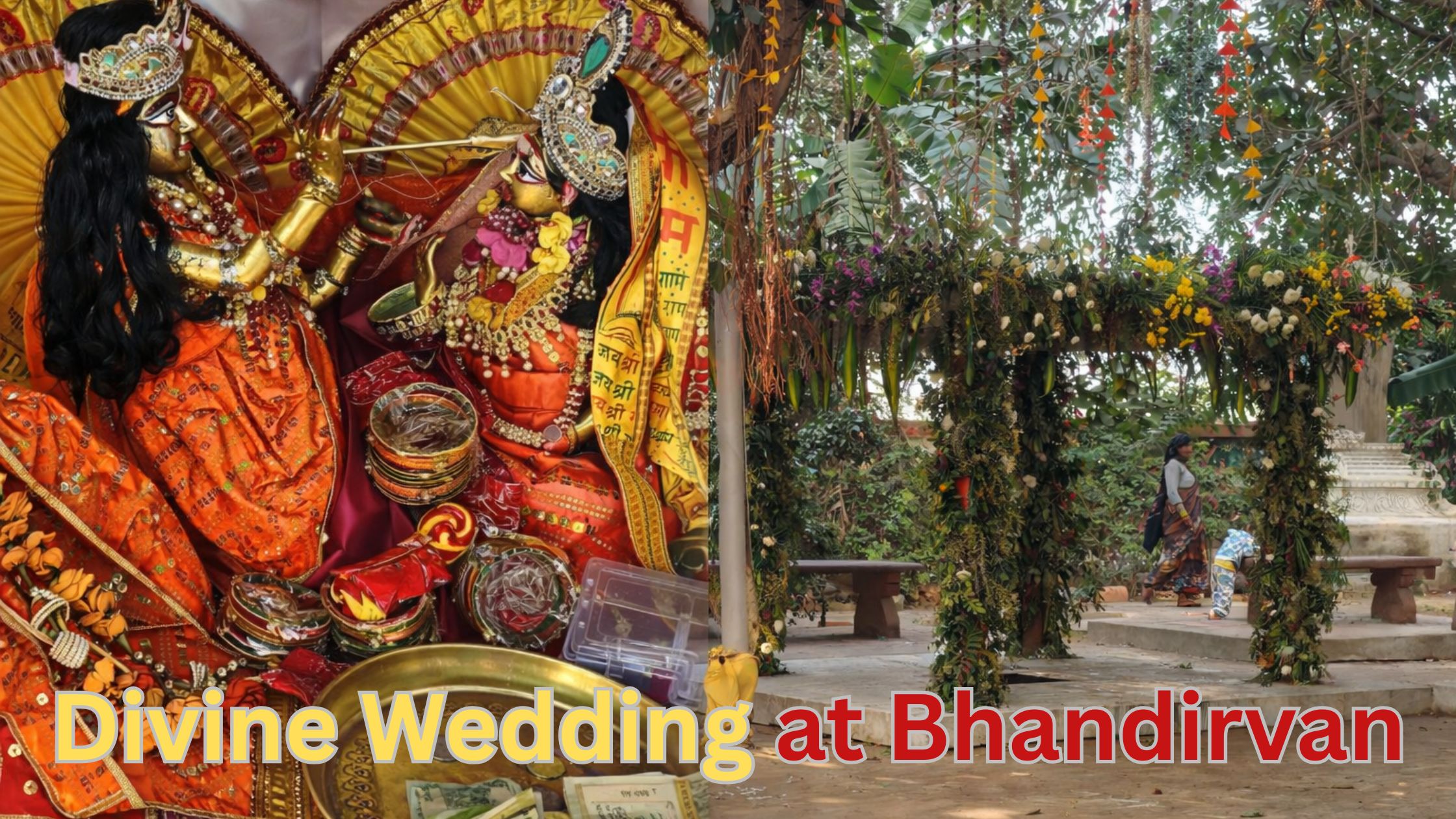
According to the Garga Samhita, the divine wedding took place in Bhandirvan, a serene forest near Vrindavan, now revered as the Radha Krishna Vivah Sthali.
The Legend of the Storm
One day, Nanda Baba took infant Krishna to graze cows in Bhandirvan. Suddenly, a violent supernatural storm engulfed the forest. Amid fear and darkness, a radiant young girl appeared—Srimati Radharani.
Trusting her divine presence, Nanda Baba handed Krishna to Radha and left to seek shelter.
As soon as they were alone, the infant Krishna transformed into his youthful, divine form, revealing his eternal identity.
Lord Brahma as the Priest
At that sacred moment, Lord Brahma descended from the heavens and performed the Gandharva Vivah—a celestial marriage based on divine consent and love.
Under ancient banyan trees:
- Radha and Krishna exchanged garlands
- Circumambulated the sacred fire
- Were bound in an eternal divine bond
Key Fact:
This legend explains why the Bhandir Bihari Temple is the only temple where Lord Krishna is seen applying sindoor on Radha’s forehead, symbolizing their divine marriage.
Rituals of Radha Krishna Vivah (Vivah Utsav)
On 19 February 2026, temples will perform Radha Krishna Vivah with complete ceremonial grandeur.
Major Rituals Include:
- Abhishekam: Sacred bathing with Panchamrit and fruit juices
- Shringar: The divine couple is dressed in matching bridal attire; Radha wears bridal jewelry and sindoor
- Varmala: Symbolic exchange of flower garlands
- Kirtan & Ras Leela: Ecstatic Harinam, bhajans, and divine dance performances
- Chappan Bhog: Offering of 56 food varieties, later distributed as Mahaprasad
Unlike human weddings, the atmosphere is filled with joy, music, colors, and divine celebration.
The Special Connection Between Radha Krishna Vivah and Phulera Dooj
What Is Phulera Dooj?
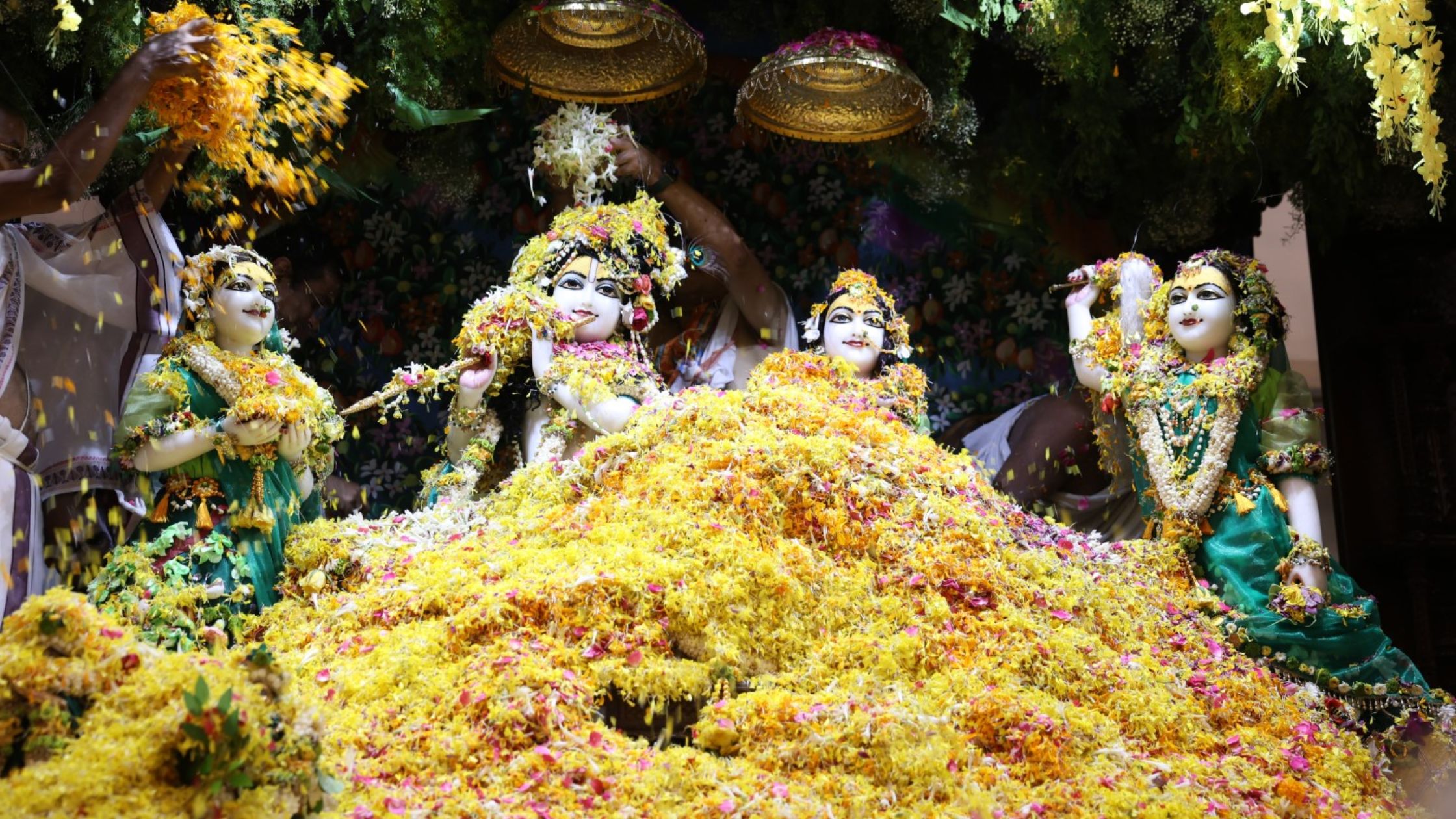
Phulera Dooj is a highly auspicious festival celebrated during the Phalguna month, marking the beginning of Holi festivities. On this day, Lord Krishna and Radha are worshipped with flowers instead of colors.
Why Phulera Dooj Is Important
- It is considered Abujh Muhurat (no need for specific muhurat)
- Associated with divine joy, love, and marriage
- Temples in Vrindavan and Bhandirvan are decorated entirely with fresh flowers
Phulera Dooj and Radha Krishna Vivah
Phulera Dooj symbolizes the joyful, public celebration of Radha Krishna’s divine union, while Radha Krishna Vivah represents the spiritual completion of that bond.
That is why devotees visiting Bhandirvan around Phulera Dooj and Radha Krishna Vivah 2026 experience the most vibrant and spiritually charged celebrations.
Read more: Shri Girdharlal Ji Vyahula Utsav 2026
Spiritual Significance of Radha Krishna Vivah
In Vedic philosophy:
- Radha = Jivatma (individual soul) & Hladini Shakti
- Krishna = Paramatma (Supreme Soul)
Their wedding represents the ultimate union of soul and God, achieved through pure Bhakti.
It teaches devotees that:
- True union is spiritual, not physical
- Love rooted in devotion transcends time and separation
- Surrender leads to divine fulfillment
Cultural and Social Importance
Radha Krishna Vivah has deeply influenced:
- Indian classical music and dance
- Bhakti poetry and Ras Leela traditions
- Temple art, murals, and miniature paintings
- Folk festivals across North India
It reinforces values of:
- Selfless love
- Equality of divine masculine and feminine
- Devotion beyond social validation
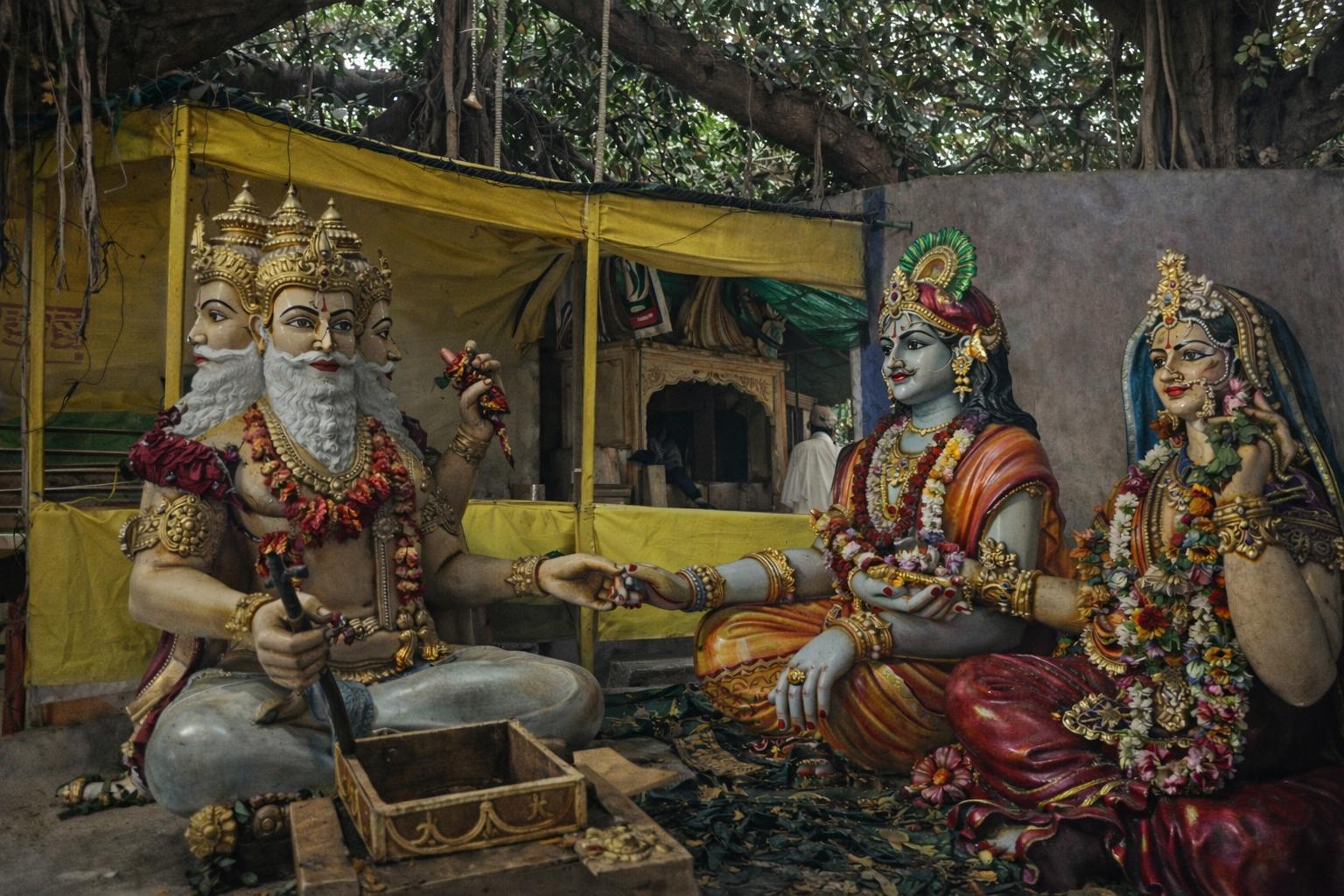
Visiting Bhandirvan in 2026: The Vivah Sthali
For devotees planning a pilgrimage around 19 February 2026, Bhandirvan is a must-visit.
Location: About 10 km from Vrindavan
Key Attractions:
- Radha-Bhandir Bihari Temple
- Ancient banyan trees linked to the wedding
- Venu Kup, a sacred well believed to be created by Krishna’s flute
Pro Tip:
Visit during Phulera Dooj to witness breathtaking floral decorations and divine festivities.
Conclusion: A Divine Wedding Beyond Time
Radha Krishna Vivah 2026 on 19 February is not merely a ritual—it is a celebration of eternal love, divine unity, and spiritual awakening. Rooted in sacred scriptures, enriched by folklore, and alive in cultural traditions, this divine wedding reminds devotees that when love becomes devotion and devotion becomes surrender, the soul meets the divine.
Read more: Khatu Shyam Falgun Mela 2026