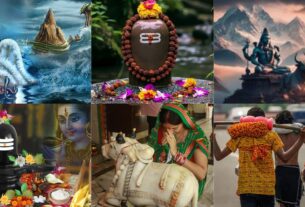

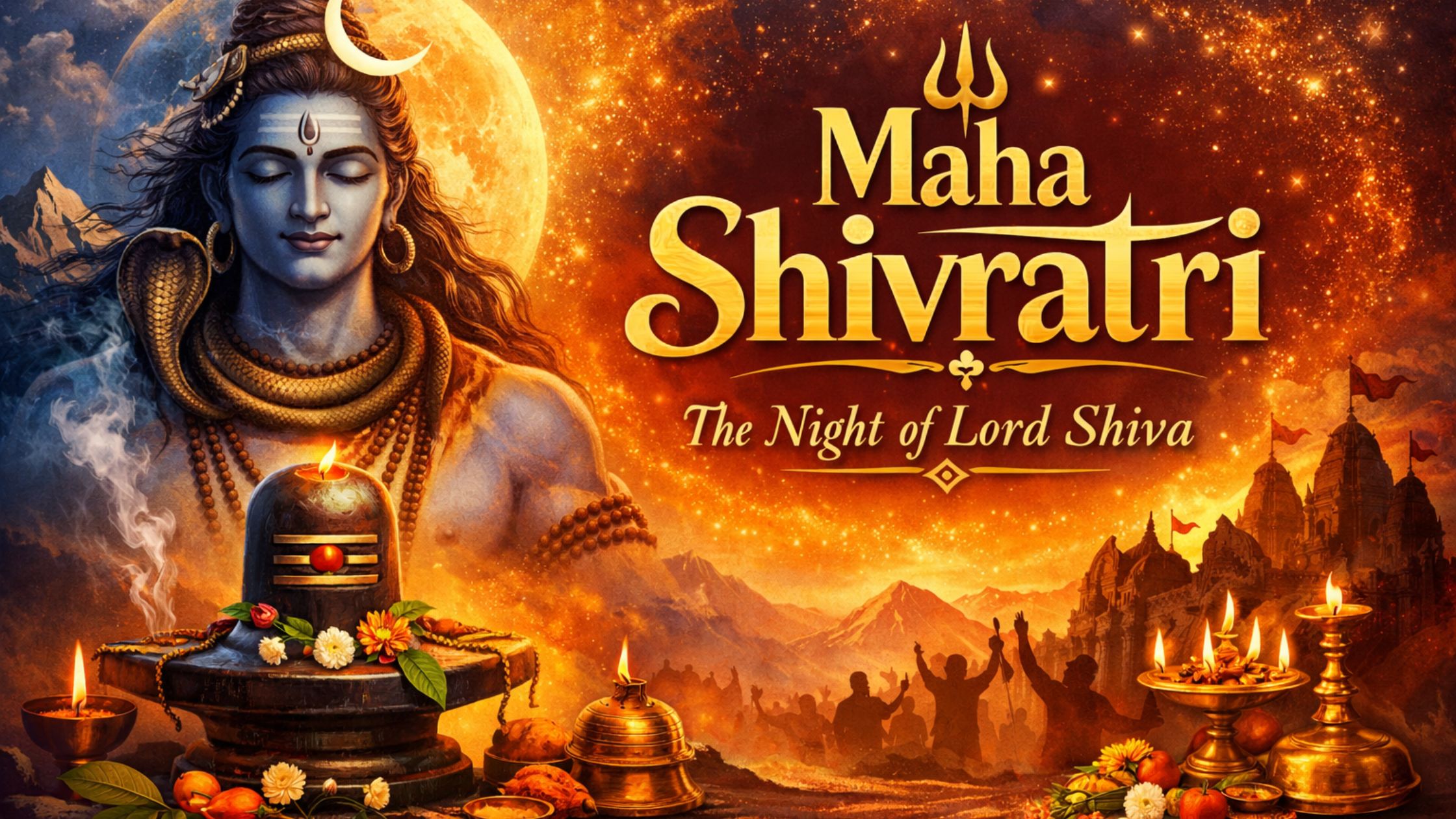
Maha Shivratri 2026, observed on Sunday, 15 February, is one of the most sacred nights in Hinduism. Dedicated to Lord Shiva, this festival is marked by fasting, meditation, night-long vigil (jagaran), and ritual worship of the Shivling. It is believed that sincere devotion on this night brings spiritual awakening, removal of negative karma, and divine grace.
This complete guide explains the exact date and timings, puja vidhi, myths and legends, spiritual significance, fasting rules, mantras, recipes, and regional traditions so devotees can observe Maha Shivratri with full understanding and devotion.
Exact Date and Auspicious Timings – Maha Shivratri 2026
- Festival Date: Sunday, 15 February 2026
- Chaturdashi Tithi Begins: 09:12 AM, Feb 15
- Chaturdashi Tithi Ends: 07:34 AM, Feb 16
Four Prahar Puja Timings (Reference)
- First Prahar: 6:30 PM – 9:30 PM
- Second Prahar: 9:30 PM – 12:30 AM
- Nishita Kaal (Most Auspicious): 12:09 AM – 01:01 AM
- Third Prahar: 12:30 AM – 3:30 AM
- Fourth Prahar: 3:30 AM – 6:30 AM
- Parana (Fast Breaking): After sunrise on Feb 16
Devotees may follow local temple timings while keeping Nishita Kaal as the most spiritually powerful period.
Myths of Maha Shivratri: What Are the Traditional Beliefs?
In Hindu tradition, myths are sacred stories that convey deep spiritual truths. Maha Shivratri is associated with several such legends:
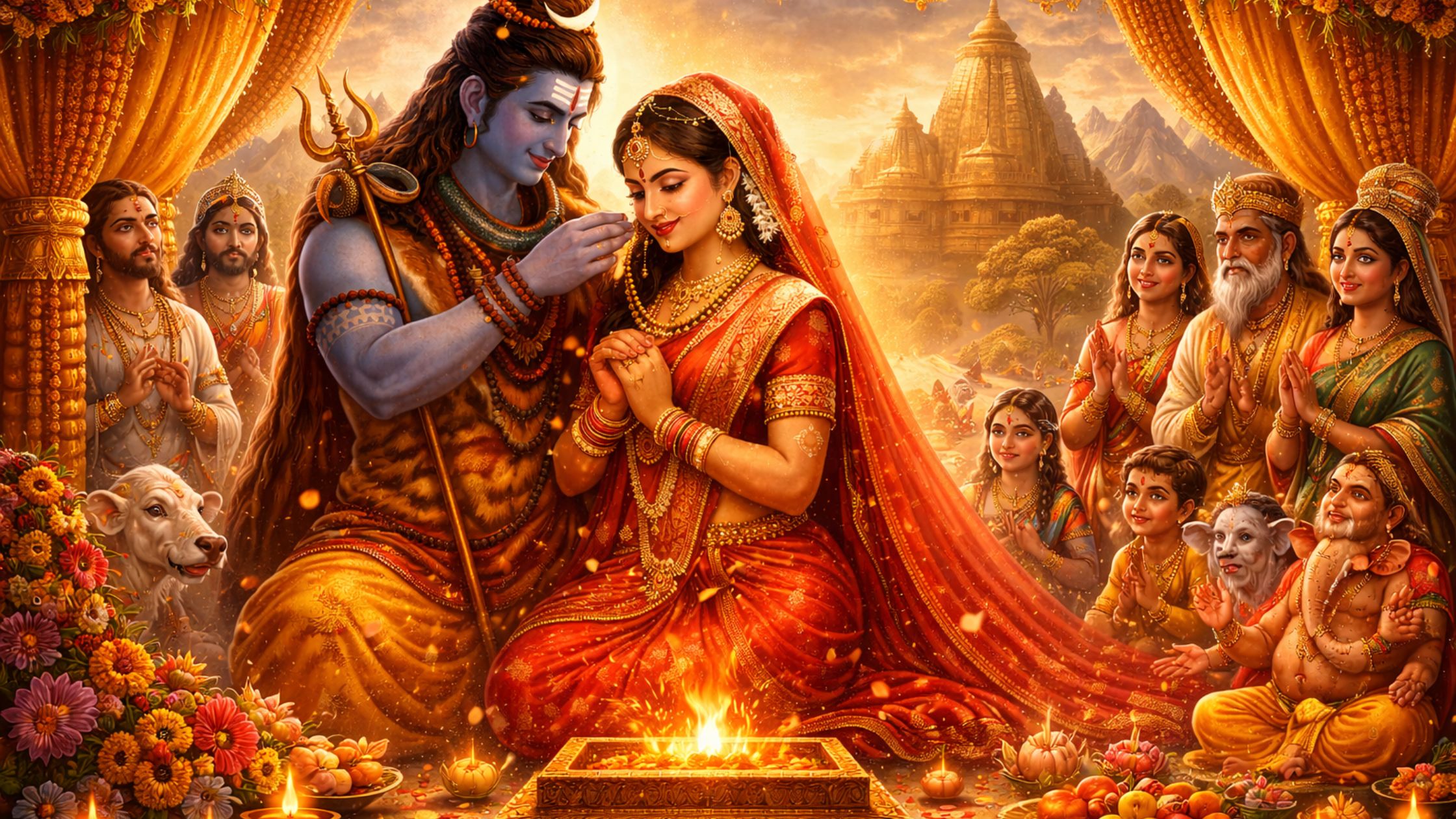
1. The Divine Marriage of Shiva and Parvati
One widely believed myth states that Maha Shivratri marks the wedding night of Lord Shiva and Goddess Parvati. Parvati performed intense penance to attain Shiva as her husband. Their union symbolizes the balance of masculine and feminine energies, consciousness and creation.
Spiritual meaning: Devotees pray for harmony in relationships and inner balance.
2. Samudra Manthan and the Halahala Poison
During the mythological churning of the ocean (Samudra Manthan), a deadly poison called Halahala emerged, threatening all creation. To protect the universe, Lord Shiva consumed the poison and held it in his throat, which turned blue—earning him the name Neelkanth.
Spiritual meaning: Shiva absorbs negativity to protect life, teaching sacrifice and selflessness.
3. Manifestation of the Jyotirlinga
Another myth states that on Maha Shivratri, Lord Shiva appeared as an infinite pillar of light (Jyotirlinga), proving his supremacy beyond beginning and end.
Spiritual meaning: Shiva represents infinite consciousness and ultimate truth.
Read more: Sawan Month: The Sacred Bond with Lord Shiva
4. Shiva’s Cosmic Tandava
It is believed that Shiva performed his cosmic dance (Tandava) on this night, maintaining balance in the universe.
Spiritual meaning: Destruction of ignorance and rebirth of awareness.
Complete Puja Vidhi for Maha Shivratri
Puja Samagri
- Shivling or picture of Lord Shiva
- Bilva leaves (21 or 51)
- Milk, curd, honey, ghee (Panchamrit)
- Water, incense, diya, camphor
- Rudraksha mala
Step-by-Step Puja
- Wake early, bathe, and wear clean clothes
- Take Sankalpa (vow of fasting and devotion)
- Perform Abhishek with water and Panchamrit
- Offer bilva leaves while chanting Om Namah Shivaya
- Perform aarti in each prahar
- Stay awake chanting bhajans and mantras
Spiritual Significance of Maha Shivratri
Maha Shivratri is considered the night when spiritual energy is naturally heightened. Yogic texts say the planetary alignment supports meditation and inner awakening.
- Ideal night for self-reflection and renunciation
- Grants forgiveness of past sins
- Brings peace, prosperity, and spiritual growth
- Highly beneficial for seekers of moksha
Maha Shivratri Fasting Rules (Vrat Vidhi)
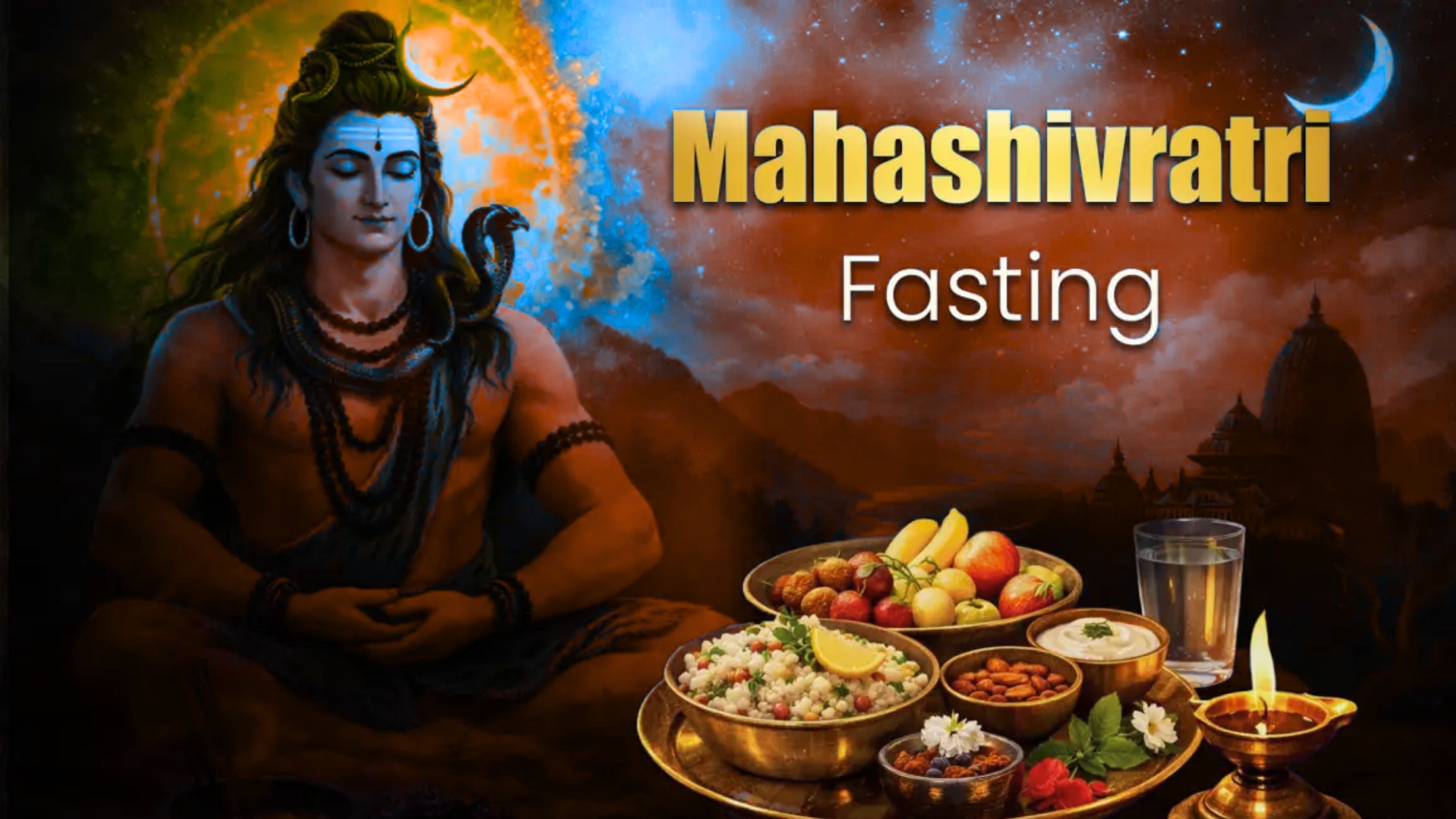
Fasting is a key part of Shivratri observance and should be chosen according to health and ability.
Types of Vrat
- Nirjala Vrat: No food or water
- Milk & Fruit Vrat: Milk, fruits, nuts
- Phalahar Vrat: Sabudana, kuttu, singhara
- Partial Fast: One light meal after Nishita Kaal
Foods to Avoid: Grains, rice, wheat, onion, garlic, and regular salt.
Popular Vrat Recipes
- Sabudana Khichdi
- Kuttu Paratha
- Singhara Halwa
- Fruits with milk or yogurt
Break the fast gently after sunrise on the next day.
Read more: Maha Shivratri Vrat Recipes
Important Mantras and Bhajans
- Om Namah Shivaya
- Maha Mrityunjaya Mantra
- Shiva Tandava Stotram
- Jai Shiv Omkara
Chanting these mantras throughout the night is believed to bring immense spiritual merit.
Maha Shivratri Celebrations Across India
- Night-long jagarans in temples
- Rudrabhishek and special pujas
- Devotional music and bhajans
- Pilgrimages to Jyotirlinga temples
Conclusion
Maha Shivratri 2026 is a sacred night of transformation, devotion, and awakening. By understanding the myths, rituals, and spiritual meaning, devotees can move beyond ritual and experience true inner connection with Lord Shiva.
Har Har Mahadev! Bolo Shankar Bhagwan ki Jai! 🙏🕉️
See more: Khatu Shyam Falgun Mela 2026