

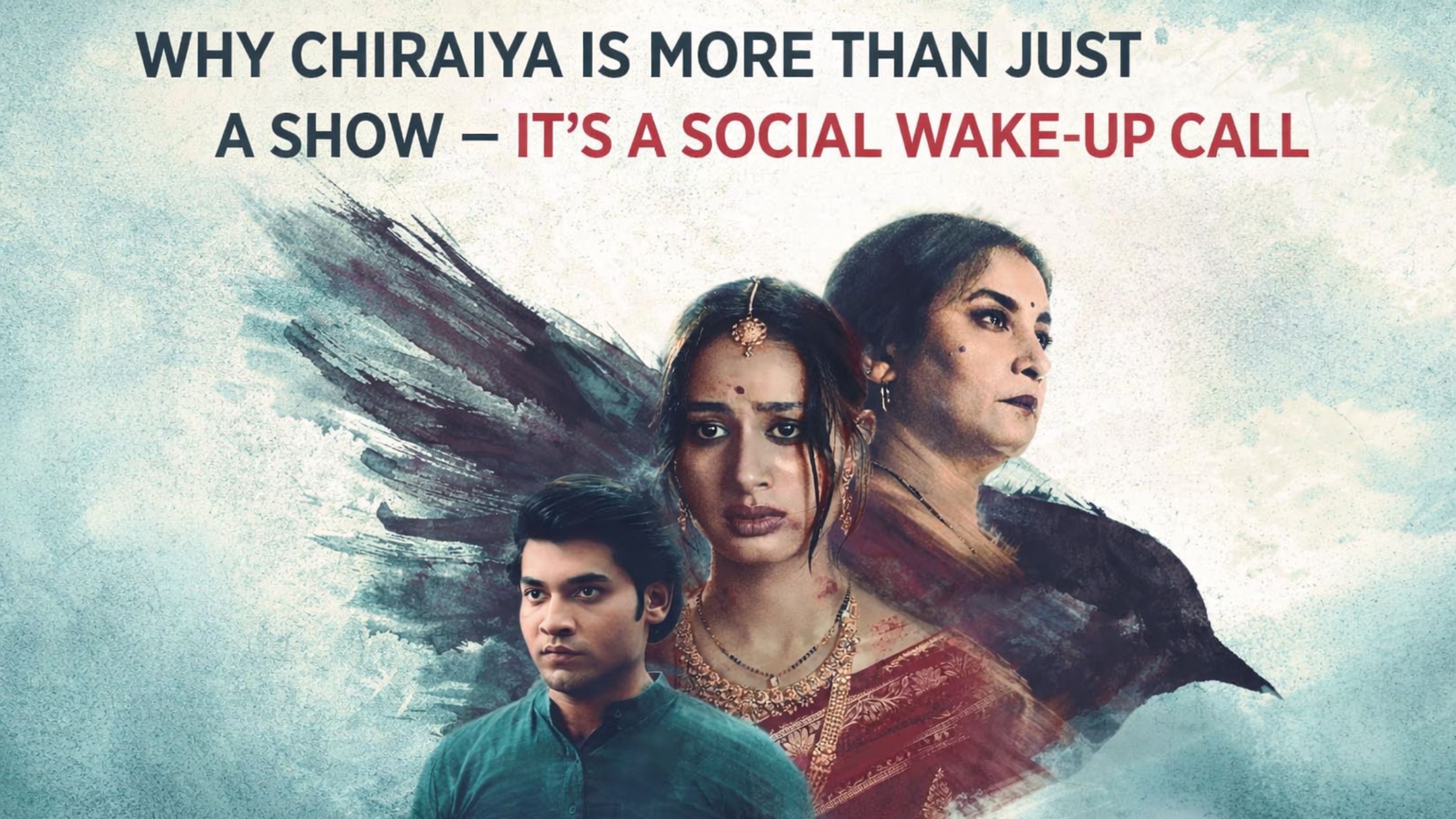
When a web series sparks discomfort, debate, and deep introspection across households, it stops being just entertainment. That’s exactly what Chiraiya has done since its release in March 2026.
At its core, the show confronts one of India’s most uncomfortable truths: the silence around consent within marriage. But its real impact goes far beyond storytelling—it has become a mirror, a conversation starter, and a much-needed social wake-up call.
Read more: “Mrs.”: A Tale of Marriage, Food, and Self-Actualization
A Story That Hits Too Close to Reality
Unlike fictional dramas that exaggerate conflict, Chiraiya builds its narrative on everyday realism. It shows a “normal” middle-class family where traditions, respect, and silence coexist with hidden abuse.
The series asks a simple yet explosive question: Does marriage cancel consent?
This question has ignited nationwide debate because it challenges a deeply rooted belief in Indian society—that marriage automatically implies lifelong consent.
The show’s portrayal of a newlywed woman facing abuse within marriage reflects a reality many prefer not to acknowledge. It strips away the comfort of denial and forces viewers to confront the truth behind closed doors.
The Legal Reality: A Gap Too Big to Ignore
One of the biggest reasons Chiraiya resonates so strongly is because it reflects a real legal contradiction in India.
- Marital rape is not a criminal offense in India (except in limited circumstances like judicial separation).
- Under existing legal provisions, a husband forcing sex on his wife (above 18) is generally not classified as rape.
- India remains among the few countries where this exception still exists.
This legal gap is exactly what Chiraiya highlights—how something morally wrong can still fall into a grey legal area.
Even today, petitions and debates continue in courts, questioning whether this exception violates a woman’s fundamental rights to dignity, equality, and bodily autonomy.
In simple terms: The show isn’t exaggerating reality—it is exposing a systemic loophole.

The Data: A Hidden Crisis
What makes Chiraiya even more powerful is that the issue it highlights is not rare—it’s widespread.
- India records over 30,000 rape cases annually
- In nearly 85–90% of cases, the accused is known to the victim
- Studies suggest that a large number of married women face sexual violence, yet
most cases go unreported due to stigma, fear, or family pressure
These numbers expose a disturbing truth:
For many women, the most unsafe space is not outside—it is inside their homes.
Chiraiya doesn’t just present a story—it gives a human face to these statistics.
Real Cases from India: When Reality Mirrors Fiction
The themes in Chiraiya are not fictional—they reflect countless real-life experiences across India.
1. The Silence Within Marriages
Many women experience forced intimacy but do not label it as abuse because it has been normalized as a “marital duty.” Silence is often mistaken for consent.
2. Legal Challenges and Petitions
Courts in India continue to hear petitions challenging the marital rape exception, questioning whether married women deserve equal protection under the law.
3. The Fear of Speaking Out
Social stigma, financial dependency, and family pressure prevent survivors from reporting abuse. In many cases, preserving “family honor” is prioritized over justice.
4. Lived Experiences Behind the Screen
Stories shared by survivors, activists, and even artists reflect how widespread and deeply embedded these issues are in everyday life.
Why Chiraiya Feels “Uncomfortable”
Many viewers describe the show as disturbing—not because it is extreme, but because it is relatable.
- It challenges patriarchal conditioning
- It exposes normalized behavior as abuse
- It forces viewers into self-reflection
- It breaks the illusion of the “perfect family”
The discomfort is intentional. It signals awareness.
Cultural Impact: A Conversation India Needed
Chiraiya is part of a growing shift where storytelling is no longer just about entertainment—it’s about impact.
The show:
- Encourages conversations about consent in marriage
- Questions long-standing societal norms
- Pushes audiences to rethink gender roles and power dynamics
- Connects legal realities with everyday life
It has sparked debates across social media and households alike. Some call it controversial, others call it necessary—but everyone is talking about it. And that is exactly the point.

Marriage Beyond the Body: Partnership, Not Possession
One of the most uncomfortable yet necessary questions Chiraiya forces us to confront is this: Is marriage only about physical access—or is it meant to be a true partnership?
In many traditional setups, marriage has long been viewed as an institution where physical intimacy is assumed, not negotiated. The idea that a spouse—especially a wife—must always be available is so deeply normalized that consent within marriage is often ignored or never discussed at all. Chiraiya challenges this belief with quiet intensity.
Through its storytelling, the series makes it evident that:
- Marriage is not ownership of another person’s body
- Intimacy is not a duty to be fulfilled on demand
- Consent is continuous, not a one-time agreement sealed at the wedding
The emotional isolation of the protagonist highlights a deeper issue—when a relationship is reduced only to physical expectations, it loses its foundation of trust and companionship.
In reality, marriage is meant to be:
- A space of mutual respect
- A bond built on emotional security
- A partnership grounded in choice, not obligation
This is where Chiraiya becomes more than just a narrative—it becomes a reflection of a larger societal flaw. When marriage is reduced to the body, it stops being a partnership and starts becoming control. As India evolves socially and culturally, younger generations are beginning to question these inherited norms. Conversations around consent, equality, and emotional well-being are slowly entering households—and Chiraiya is playing a significant role in accelerating that shift.
Why It Matters
- It highlights a critical legal gap
- It reflects real-life experiences and data
- It challenges deep-rooted societal norms
- It encourages difficult but necessary conversations
Final Thoughts
Chiraiya is not an easy watch—and it isn’t meant to be. It forces society to confront a reality it has ignored for decades: Marriage does not equal consent. Silence does not equal acceptance. By bringing this issue into mainstream conversation, the show does what laws and policies alone often cannot—it humanizes the problem. And that’s why Chiraiya is more than just a show. It is a wake-up call India can no longer ignore.
Read more: Dhurandhar The Revenge