
As the monsoon arrives in India, it brings with it the deeply spiritual and auspicious month of Sawan (also called Shravan). This month holds a special place in the hearts of devotees of Lord Shiva, the cosmic force of transformation, meditation, and pure consciousness.
Let’s dive into the roots, significance, stories, and a simple, heartfelt way to observe this sacred time.
The Origin of the Word “Shravan”
The name “Shravan” comes from the Sanskrit word “Shravana”, which is the name of a Nakshatra (lunar constellation). This Nakshatra is prominent during this month according to the Hindu calendar, which is why the month was named Shravan Maas. It usually falls during July–August in the Gregorian calendar.
Why Worship Lord Shiva in Shravan?
According to Hindu scriptures, every Monday (Somvar) of Sawan is extremely sacred to Lord Shiva. But why?
-
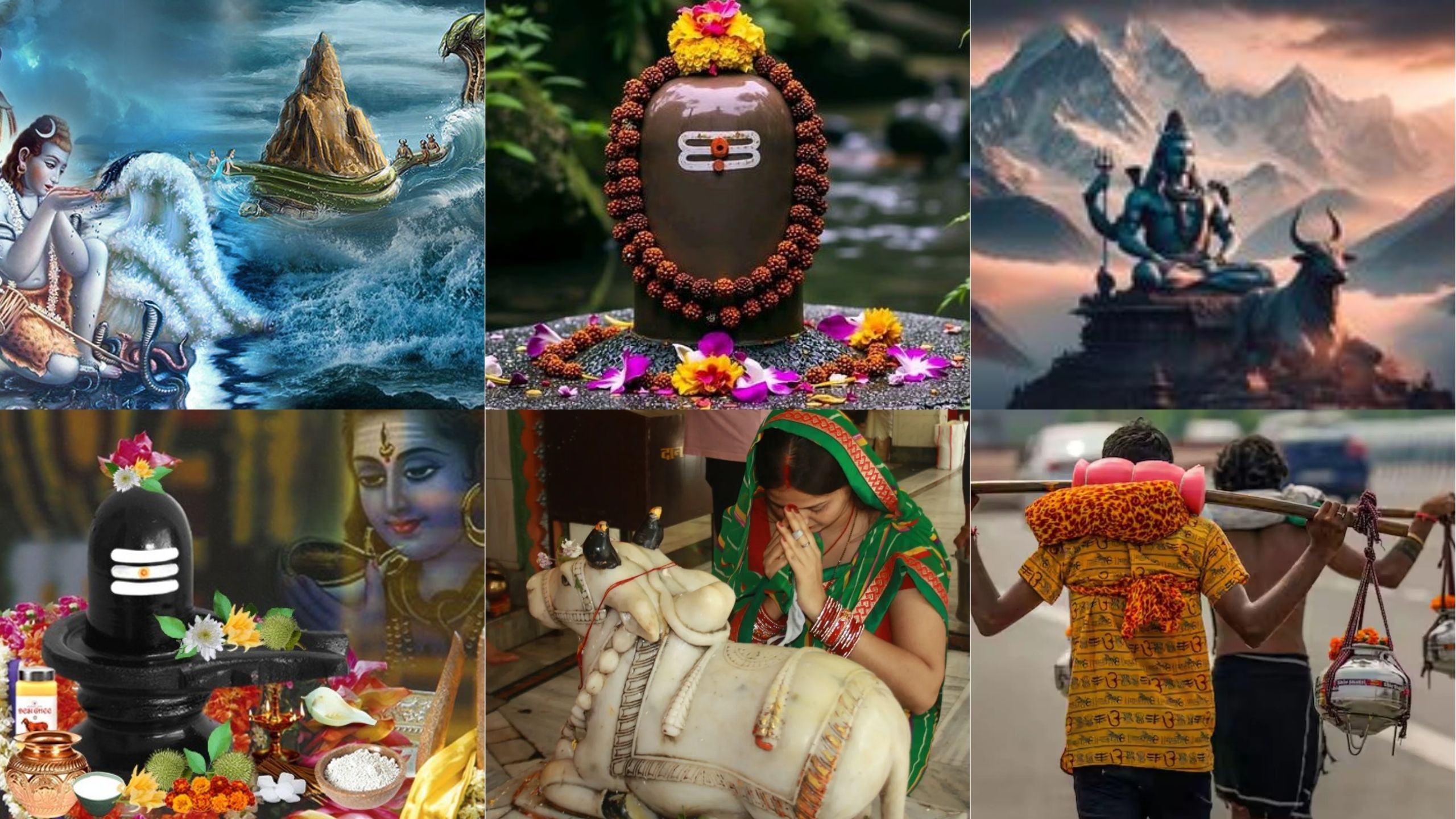
It is believed that during this month, Samudra Manthan (the churning of the ocean) took place.
-
During the Manthan, a deadly poison called Halahal emerged, which had the power to destroy creation.
-
Lord Shiva drank the poison to save the universe, and Goddess Parvati stopped it in His throat, turning it blue. This is why He is known as Neelkanth.
-
To ease the effects of the poison, devotees began offering water, milk, and Bilva leaves to Lord Shiva — a tradition that continues to this day.
Learn here: Tips and Rules for Keeping Laddu Gopal in Your House
The Origin of the Kanwar Yatra
The Kanwar Yatra is a sacred pilgrimage where devotees (called Kanwariyas) collect water from holy rivers (mainly the Ganga) and walk for miles to offer it to a Shiva Linga.
But who started it?
Ravan: The First Kanwariya
Many legends say that Ravan, the mighty king of Lanka and a fierce devotee of Shiva, was the first to undertake a form of the Kanwar Yatra.
-
Ravan wanted to please Lord Shiva and bring Him to Lanka.
-
To worship Him, Ravan carried Ganga Jal in kanwars (pots hung on a bamboo stick) and walked to pour it over the Shiva Linga he installed.
-
This act of deep devotion is seen as the origin of the Kanwar tradition by many.
Though Ravan was known as a rakshasa (demon king), his unshakable devotion was so powerful that Lord Shiva accepted it — a reminder that Shiva looks at bhakti, not labels.
Some also believe Lord Parshuram was the first Kanwariya, but both stories highlight devotion as the true path to Shiva.
Sawan Somvar Vrat: A Simple Yet Powerful Vow
During Sawan, every Monday is marked by fasting and praying to Lord Shiva. This fast is called Sawan Somvar Vrat.
What Does the Vrat Involve?
Traditionally, devotees:
-
Wake up early and bathe.
-
Visit a Shiva temple or offer prayers at home.
-
Offer water, milk, honey, Bilva leaves, white flowers, and Bhasma (sacred ash) to the Shiva Linga.
-
Chant “Om Namah Shivaya” or recite the Maha Mrityunjaya Mantra.
-
Fast from sunrise to sunset, eating only fruits or light food after evening prayers.
A Simple Ritual: Because Shiva Sees the Heart, Not Rituals
You don’t need to know complex rituals to reach Shambhu, the Lord of the simple and sincere.
Here’s a humble, heart-based ritual anyone can follow:
-
Wake up and bathe.
-
Sit in a quiet space with a picture or idol of Lord Shiva.
-
Close your eyes and chant “Om Namah Shivaya” from your heart.
-
Offer a glass of water or milk — even if just in your mind.
-
Say honestly:
“Bholenath, I don’t know all the customs, but my heart is with You. Accept my devotion.”
That’s enough. Shiva is not the God of formality — He is the God of feeling.
Sawan Is a Time to Transform
This month is not just about external rituals — it’s about cleansing your inner self, just like the rains wash away the dust from the earth.
Use this time to:
-
Reflect
-
Meditate
-
Let go of anger
-
Offer gratitude
-
Reconnect with your purpose
Final Thoughts
Whether you’re walking with a Kanwar, fasting on Mondays, or just whispering “Om Namah Shivaya” under your breath, Shiva listens. In this Sawan, don’t stress about rituals. Just come as you are.
Because the Lord of Lords lives not in the heavens, but in hearts that are true.
Har Har Mahadev!
Read here: Vrat Recipes 2025